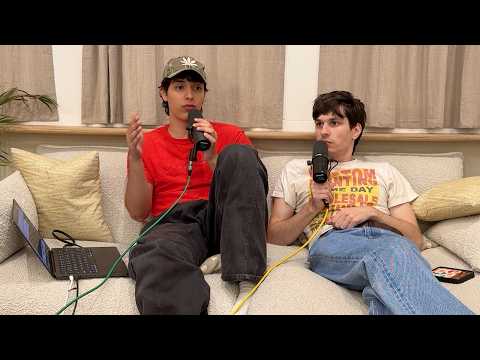
Dan Bongino and the hosts frame the coming midterms almost entirely through the perceived weaknesses of Democratic politicians and activists, opening with an explicitly electoral message supporting Michael Watley before moving into predictions about the broader political environment. Bongino argues that Democrats are presenting Republicans with an unusually weak field of opponents, but the discussion offers little concrete electoral evidence for that conclusion. Even Bongino briefly acknowledges the disconnect between his confidence and indications that the races may be close.
Humor and ridicule drive most of the segment. Green hair at political rallies, JB Pritzker's weight loss, egg freezing, Gavin Newsom dining at Nobu, and other personal or cultural details become shorthand for portraying Democrats as wealthy, strange, hypocritical, or disconnected from ordinary voters. The rapid-fire delivery gives the conversation energy, and Bongino is comfortable improvising punchlines, but several attacks concern image and lifestyle more than governing records or policy consequences.
The more substantive argument arrives when Bongino compares current Democrats with Barack Obama's political communication. He characterizes Obama's "hope and change" approach as slogan-driven and argues that contemporary Democratic figures similarly use appealing terminology while obscuring what their policies actually mean. That is a clearly expressed political critique, but it remains Bongino's interpretation rather than something demonstrated through a detailed examination of specific proposals.
A discussion of public spending and political knowledge offers another potentially meaningful line of criticism. The hosts refer to a previous exchange in which Abdul El-Sayed allegedly could not provide the national debt figure, using it to argue that politicians advocating expensive programs should understand the country's fiscal position. Within this segment, however, viewers are given the hosts' characterization of that exchange rather than enough surrounding context to assess El-Sayed's answer or the policy discussion in which it occurred.
Nikole Hannah-Jones receives similarly harsh treatment over an opinion piece concerning her daughter's schooling. Bongino interprets the story as evidence that political commitments were placed ahead of the child's educational interests and then extends that criticism to the Democratic Party generally. The anecdote is rhetorically effective for the hosts' argument, but the segment does not examine Hannah-Jones's reasoning in depth, making the sweeping partisan conclusion considerably broader than the material presented here can establish.
As political entertainment, the conversation moves briskly and benefits from strong chemistry between speakers who understand one another's comedic rhythm. As analysis, it is much thinner. Democrats are repeatedly described through insults and selected anecdotes, while Republican shortcomings receive only Bongino's passing acknowledgment that his own side has "characters too." Viewers looking for a spirited partisan exchange may find plenty of memorable lines, but anyone trying to understand the midterm landscape, competing policies, or the strength of the underlying electoral arguments gets relatively little to work with.
Pros
- Bongino's energetic delivery and quick humor keep the short political discussion moving.
- The segment raises legitimate subjects for political scrutiny, including fiscal knowledge, public spending, education, and the gap between campaign slogans and governing.
- Bongino briefly acknowledges problems within the Republican Party rather than presenting its politicians as universally flawless.
Cons
- Claims about Democratic electoral weakness are asserted without polling, race-specific evidence, or other supporting information.
- Personal mockery and lifestyle anecdotes frequently substitute for substantive examination of candidates and policies.
- Examples involving Abdul El-Sayed and Nikole Hannah-Jones are presented largely through the hosts' interpretations without enough context for viewers to independently evaluate them.
- The discussion generalizes from individual Democrats to the entire party while giving little comparable scrutiny to Republicans.
The lively chemistry and sharp one-liners make this an efficient piece of partisan television, but the political analysis rarely reaches the depth suggested by its sweeping conclusions. Stronger evidence, fuller context for the examples, and more attention to actual electoral and policy questions would have made the argument substantially more informative.