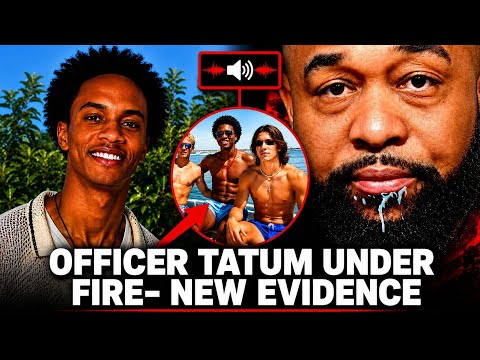
The most responsible element of this interview is also the source of its central tension: Ben Crump repeatedly emphasizes that he does not want to speculate while discussing a case surrounded by unanswered questions and competing accounts. He describes Nolan Wells as an 18-year-old who disappeared after a July 4 outing on Horn Island and whose body was later found washed ashore. From there, the discussion focuses less on proposing a definitive explanation than on why Wells' family believes the circumstances warrant a fuller investigation.
The clearest point of uncertainty concerns what happened when Wells' friends left the island. Crump describes conflicting accounts in which the friends reportedly said Wells intended to remain behind with a young woman named Katie, while Katie reportedly said he got back on the boat with them. The interviewer adds that Katie's sister Gracie has said Wells intended to return to the mainland with his friends. These accounts are presented as claims rather than resolved facts, and the interview is strongest when it treats the contradiction as something requiring clarification instead of proof of a particular scenario.
Crump also highlights circumstances surrounding Wells' phone, including the family's discovery that it was with his friends and allegations that Snapchat messages and texts had been deleted. He frames Wells leaving without his phone and car keys as behavior that raises questions about the assertion that he voluntarily stayed behind. That is a reasonable investigative question within the interview's framing, but the presentation does not establish who deleted the material, when it was deleted, or what it contained. Those missing details matter because suspicious circumstances and evidence of wrongdoing are not the same thing.
The emergency-call audio receives similarly cautious treatment. Crump says experts have been retained to analyze the recording and render opinions about what can actually be discerned from it, acknowledging that different listeners and forensic-audio efforts have produced interpretations of what may be heard. This restraint is important because the interview does not provide the expert findings themselves. As presented here, the audio remains evidence under examination rather than confirmation of claims circulating around the case, although references to what it "seems to suggest" occasionally edge closer to implication than the available analysis can support.
The medical discussion adds significant questions without producing a settled medical conclusion. Crump refers to a second autopsy finding involving red discoloration near the back of the brain and says the original medical examiner retained Wells' throat. He relays pathologist Dr. Roger Mitchell's explanation that retaining the throat can occur when compression or pressure is suspected, but he declines the interviewer's invitation to speculate about what happened to Wells' neck. Crump instead stresses the need to compare findings from both autopsies and await toxicology, which appropriately limits what can be concluded from the information presented.
One of the interview's more useful distinctions comes when Crump explains Mitchell's point that drowning, even if ultimately established as the cause of death, would not by itself reconstruct the events that put Wells in the water. Questions about whether Wells was conscious or unconscious and whether he entered voluntarily or through force would remain separate issues. The same caution applies when the interviewer raises a friend's claim that Wells had been drinking: Crump points to toxicology and firsthand testimony as better ways to establish intoxication than inference. That approach gives the discussion a stronger evidentiary standard than its more suggestive moments elsewhere.
As an interview, the segment benefits from direct questions about the major disputed elements, but its rapid conversational delivery and repeated phrasing sometimes make a complicated case harder to follow. Crump's recurring emphasis on truth, transparency and an impartial investigation provides a consistent framework, while his concern that Wells' death may have been dismissed as an accidental drowning without sufficient investigation explains the family's position. Still, the video offers unresolved allegations, reported contradictions and pending expert work rather than a completed evidentiary account. Its value therefore lies primarily in identifying the questions Crump and Wells' family want investigated, not in establishing what ultimately happened.
Pros
- Crump repeatedly distinguishes unanswered questions from conclusions and explicitly declines to speculate when pressed about the medical evidence.
- Clearly identifies the conflicting accounts concerning whether Wells remained on the island or returned to the boat.
- Explains why the location of Wells' phone and reported deleted messages are considered relevant without establishing them as proof of wrongdoing.
- Makes clear that expert analysis of the emergency-call audio is still underway rather than presenting disputed interpretations as settled findings.
- The discussion of drowning usefully separates a possible medical cause of death from the unresolved circumstances that could have preceded it.
- Emphasizes toxicology, autopsy comparison and firsthand evidence as necessary components of a fuller assessment.
Cons
- Several potentially significant claims are discussed without enough underlying detail to evaluate their evidentiary weight.
- The emergency-call discussion can sound suggestive despite the expert analysis being unfinished.
- References to deleted messages do not establish who deleted them, when they disappeared or whether their contents were relevant.
- The medical findings are necessarily incomplete because toxicology and reconciliation of the two autopsies are still described as pending.
- The loose, repetitive conversational delivery sometimes obscures distinctions among confirmed events, reported statements and investigative questions.
The interview is most useful as an explanation of why Nolan Wells' family and representatives believe significant questions remain unanswered, particularly around conflicting witness accounts, his phone, the emergency-call recording and the medical findings. Crump generally resists turning those questions into definitive accusations, but the absence of completed audio analysis, toxicology and a reconciled medical assessment means the segment cannot resolve the case it discusses. Its strongest contribution is therefore the call for a thorough investigation rather than any proposed explanation of Wells' death.