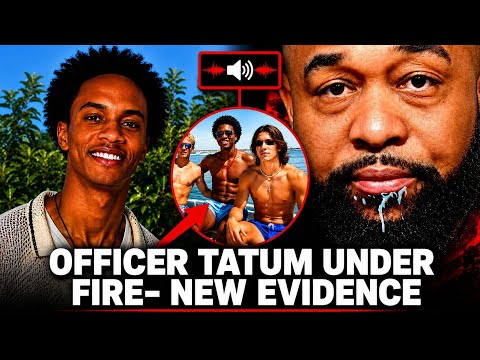
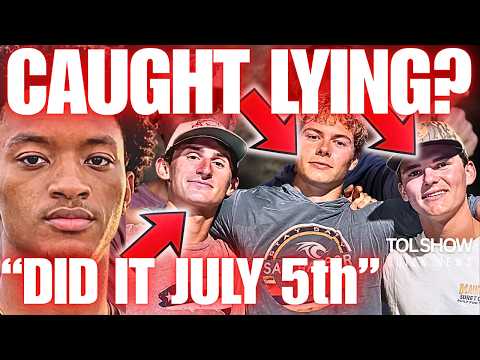
Nolan Wells’ final known hours remain surrounded by conflicting accounts, uncertain timelines, and an enormous amount of online speculation, and the strongest sections here resist the temptation to turn those gaps into proof of a crime. Rather than simply embracing dramatic claims about a body being concealed on a boat, GPS being deliberately disconnected, evidence being washed away, or officials participating in a cover-up, the presentation repeatedly asks what evidence would actually be required to substantiate such allegations. That distinction is essential because the material includes commentators making extraordinarily serious accusations alongside more cautious efforts to determine what can genuinely be verified.
The treatment of online investigators captures both the usefulness and danger of crowdsourced detective work particularly well. Social-media users compare swimsuits, jewelry, glasses, photographs, friendships, followers, and apparent boat occupants in an effort to reconstruct who was where, and some of that work may identify worthwhile questions. But visual resemblance, social-media connections, and interpretations of body language do not establish involvement in wrongdoing, while claims that people secretly returned to an island or disposed of a body require vastly stronger evidence than is presented. The later analytical sections are commendably skeptical of precisely this kind of escalation, although including lengthy clips of highly confident speculation still gives unsupported accusations considerable exposure before they are placed into a more rigorous framework.
Katie’s disputed role receives the most detailed and productive analysis. Her reported understanding that Nolan intended to return to his friends does not neatly match Warren’s reported account that Nolan explicitly refused to leave because he planned to stay behind and ride back with someone else. The presentation goes beyond merely declaring this a contradiction by examining the physical circumstances: where Nolan and Katie supposedly were, which boat they may have been sitting on, what Nolan reportedly said, and what actually happened during the moments surrounding the group’s departure. Importantly, these discrepancies are framed as unresolved questions rather than evidence that Katie committed wrongdoing, and the distinction between a person investigators might reasonably want to interview and an actual criminal suspect is handled responsibly.
Another strong section tests the allegation that Mississippi’s governor had a personal friendship with the parent of someone connected to the case. Instead of treating an alleged political connection as confirmation of a cover-up, the analysis identifies the kinds of records that could substantiate such a relationship and reports finding no documented evidence of it. The caveat that absence of publicly located evidence cannot conclusively establish that no relationship exists is appropriate. This is exactly the evidentiary discipline the broader discussion needs, especially when other speakers use phrases such as “clear as day” or “all the makings of a cover up” without demonstrating the factual chain necessary to support those conclusions.
Ashley Cole’s public statement is handled with similar care. Her expressed willingness to communicate with Nolan’s family through attorney Ben Crump is recognized as meaningful without being interpreted as proof of either innocence or culpability. The discussion reasonably notes the unresolved tension between promising to provide information and apparently not yet having communicated directly with the family’s legal team, while also explaining why declining interviews but issuing a controlled written statement is not inherently contradictory or suspicious. This section benefits from considering an ordinary, non-conspiratorial explanation before entertaining darker interpretations—a standard that is not consistently followed by some of the outside commentary included elsewhere.
The presentation becomes less secure when discussing Nolan’s Snapchat accounts and phone. Missing recent material may understandably raise questions, particularly given his mother’s reported expectations about his normal posting habits, but the leap from missing content to somebody having “tampered with his phone” is not established by the information presented. Claims about what automated Snapchat messages should have appeared, how long particular material should remain visible, and what their absence demonstrates would require firmer technical verification before carrying significant evidentiary weight. Similarly, assertions based on identifying people from social-media imagery remain interpretations rather than confirmed identifications unless independently corroborated.
The closing shift toward methodology substantially improves the piece. Asking viewers to distinguish a claim from its underlying source, identify what evidence should exist, compare overlapping accounts, consider incentives, and separate something that “feels true” from something actually confirmed provides a useful framework for approaching a case increasingly dominated by internet theories. The report of local attorney Ahmad Smith joining the Wells family’s legal effort also provides a concrete development rather than another speculative thread. The main weakness is structural: the responsible evidence-testing sections coexist with sensational clips and repeated theories that they are implicitly trying to correct, producing an uneven presentation in which careful skepticism sometimes arrives only after unsupported allegations have already been given substantial airtime.
Pros
- Carefully distinguishes major allegations from evidence that can actually be verified, particularly when examining the claimed connection between Mississippi’s governor and a parent associated with the case.
- Identifies specific discrepancies between Katie’s reported account and Warren’s version of Nolan’s final interaction without treating those discrepancies as proof of criminal conduct.
- Correctly emphasizes that being potentially useful to investigators is fundamentally different from being a suspect supported by evidence.
- Gives Ashley Cole’s statement a balanced reading that recognizes both its genuine offer of cooperation and the unanswered question of whether that offer produces substantive communication.
- Provides a practical framework for separating primary evidence, reported accounts, plausible interpretations, and speculation in a highly contentious case.
- Ends with the concrete development of Ahmad Smith joining the Wells family’s independent investigative effort rather than pretending the accumulated theories have solved Nolan’s death.
Cons
- Lengthy clips make extremely serious allegations about murder, evidence disposal, coordinated deception, and a political cover-up without presenting evidence sufficient to establish those claims.
- Social-media identification based on swimsuits, jewelry, glasses, relationships, followers, and photographs can generate investigative leads but is sometimes presented with more certainty than those comparisons justify.
- The discussion of missing Snapchat material moves too readily toward deliberate phone tampering without sufficiently establishing the platform behavior necessary to support that inference.
- Body-language analysis is introduced as part of the online investigation despite eye movements and interview mannerisms providing no reliable basis here for determining whether someone is lying.
- Repetition and abrupt movement between sensational commentary, social-media theories, careful verification, racial commentary, legal analysis, and news footage make an otherwise thoughtful evidentiary examination considerably more sprawling than necessary.
The most valuable work here comes from refusing to let unresolved contradictions automatically become evidence of murder, conspiracy, or guilt. Its careful examination of competing accounts and verification standards is genuinely useful, but the impact is weakened by giving substantial space to precisely the kind of unsupported accusations and speculative identification that the later analysis warns viewers against.