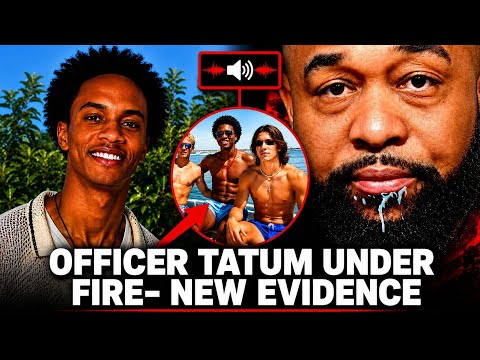
Stephen A. Smith builds this discussion around a genuinely useful premise: there are competing interpretations of Nolan Wells' death, significant unanswered questions remain, and neither public suspicion nor private assurances should substitute for a completed investigation. Civil rights attorney Charles F. Coleman Jr. repeatedly emphasizes the limits of what is known, while former police officer Brandon Tatum brings firsthand reporting from conversations with Wells' friends and their families. That contrast gives the discussion real value because it exposes how differently the same incomplete set of circumstances can be interpreted.
Coleman provides the strongest grounding when discussing the independent autopsy and the investigative process. As he describes it, the family's examination did not establish homicide but also did not provide a definitive explanation for Wells' death, with the state's autopsy, toxicology findings, witness accounts, and other investigative material still outstanding. His repeated insistence that incomplete information should remain incomplete information is especially important because nearly every major disagreement on the panel ultimately turns on evidence the public does not yet possess.
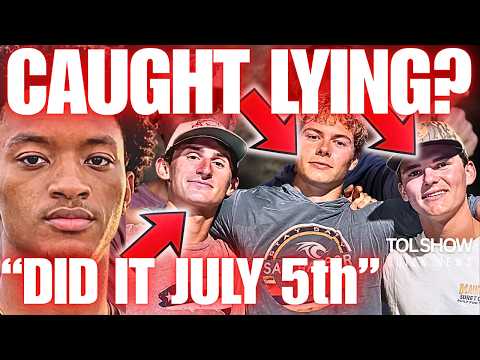
Tatum adds information that, if accurately characterized, complicates the simplified narrative that Wells traveled to an isolated location only with a few white friends and never returned. He says numerous other people were present, including Black friends, and claims to have reviewed messages, location data, photographs, and communications supporting portions of the young men's accounts. Those details deserve consideration, particularly his distinction between questioning the circumstances of Wells' death and publicly treating specific young men as responsible before investigators have established that connection. The limitation is equally important: viewers are hearing Tatum's description of evidence rather than independently examining the full investigative record.
The discussion becomes less disciplined when disagreement over evidence turns into arguments about motives. Tatum moves beyond defending the young men against premature accusations and speculates that Al Sharpton and Benjamin Crump may be exploiting the family's tragedy for money, then suggests the parents themselves could potentially be trying to profit. Nothing presented in the conversation establishes those motives. Smith appropriately challenges the leap involving Wells' parents, while Coleman points out the contradiction in condemning unsupported character judgments against one group while making similarly unsupported judgments about another.
Race is handled with more complexity than the most polarized exchanges initially suggest. Coleman argues that Mississippi's racial history is relevant context without proving racial motivation in this particular death, while Tatum argues that historical injustice should not become evidence against individuals simply because they are white. Both positions identify legitimate distinctions, but the debate frequently collapses them into a binary choice between ignoring race and presuming racism. Smith is most useful when he separates the questions: the history can reasonably explain heightened public suspicion, while suspicion still cannot establish responsibility for Wells' death.
Smith's moderation is energetic and occasionally effective, particularly when he forces both guests to clarify what they are actually claiming. He distinguishes Tatum's argument that specific young men have been unfairly vilified from the broader question of whether Wells may have suffered foul play, and he pushes Coleman to acknowledge that public statements of suspicion can function socially like accusations even when they fall short of a formal legal allegation. Yet the constant interruptions, overlapping voices, and increasingly personal exchanges make substantial portions of the conversation difficult to follow. The promise to present "two very different perspectives" is fulfilled, but not always in a manner that helps viewers separate established information from advocacy.
The largest problem arrives after the panel ends. Smith correctly says that the cause and circumstances of Wells' death remain unknown, but then states that he finds it very difficult to believe Wells simply drowned or that no foul play occurred. Nothing presented during the discussion establishes that conclusion, and it sits uneasily beside the show's repeated warnings against jumping ahead of the evidence. His statement that a Black teenager dying after going out with white young men "doesn't look right," particularly in Mississippi, accurately conveys his suspicion but does not supply evidence about what happened. The strongest conclusion available from the discussion is narrower: an 18-year-old died under unexplained circumstances, competing accounts and incomplete forensic information remain, and a thorough investigation is necessary before assigning responsibility.
Pros
- Presents genuinely different interpretations rather than constructing superficial disagreement.
- Coleman consistently distinguishes unanswered questions from evidence establishing homicide or individual guilt.
- Tatum contributes potentially important context about the number of people present and challenges an oversimplified account of who accompanied Wells.
- Smith repeatedly presses both guests to clarify whether they are discussing suspicion, evidence, guilt, or investigative fairness.
- The discussion ultimately maintains broad agreement that Wells' unexplained death warrants a thorough investigation.
Cons
- Tatum makes serious speculative claims about the motives of Sharpton, Crump, and even Wells' parents without evidence presented to support them.
- Several pieces of potentially important evidence are described secondhand rather than independently established within the discussion.
- Frequent interruptions and increasingly combative exchanges make distinctions between factual claims and argument harder to follow.
- Historical examples involving race sometimes become substitutes for addressing the specific evidence available in this case.
- Smith's closing assertion that drowning or an absence of foul play is difficult to believe goes beyond what the presented evidence establishes.
- The closing commentary partly undermines the panel's strongest message about withholding conclusions until the investigation is complete.
The discussion succeeds when it exposes how incomplete evidence can produce radically different narratives and insists that neither suspicion nor exoneration should outrun the investigation. It becomes much weaker whenever participants speculate about motives or outcomes that the available information cannot establish. The unresolved death deserves rigorous scrutiny, but the video's own strongest arguments demonstrate why that scrutiny should precede conclusions rather than follow them.