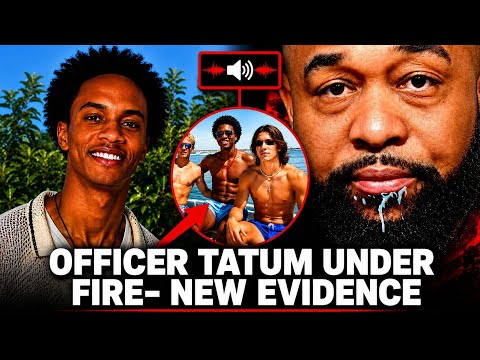
The most consequential development here is surprisingly straightforward: attorneys representing several of Nolan Wells' friends say witnesses saw Wells alive on Horn Island around 6 p.m., roughly an hour and a half after the Triton boat carrying their clients allegedly departed. If that timeline can be independently established, it would substantially undermine theories placing those men with Wells at the time of his death. The video recognizes the importance of the claim, but importantly, it does not establish it as fact; the witnesses are unnamed, their accounts are described by the attorneys rather than presented directly, and several basic details about the circumstances of the sightings remain unanswered.
Nancy Grace is strongest when she tests that purported 6 p.m. identification instead of simply accepting the attorneys' confidence. She asks whether the witnesses personally knew Wells, whether they were together, whether they had discussed their memories, whether alcohol could have affected them, and how they established the time. The attorneys say at least two witnesses knew Wells and have spoken with investigators, but they cannot answer every reliability question. That exchange gives the episode a useful evidentiary focus: there is a major potentially exculpatory claim here, but viewers are shown exactly why an attorney asserting that witnesses made a positive identification is not the same as independently verifying one.
The discussion also corrects some confusion surrounding supposed polygraph testing. The attorneys state that their clients did not take polygraphs, while describing other individuals as having undergone a different form of stress or voice analysis. Grace acknowledges why defense attorneys commonly advise clients against polygraphs and challenges the overly broad statement that polygraphs simply cannot enter court proceedings. More importantly for viewers, the conversation demonstrates why claims that everyone "passed a polygraph" can become distorted as information passes between interviews and online commentary. Neither polygraph results nor other stress-analysis tests should be treated here as proof of innocence or guilt.
Other unresolved evidence receives appropriately skeptical treatment. Grace repeatedly asks whether the Triton was forensically searched, including whether techniques such as alternative light sources, chemical testing or dogs were used, but the attorneys ultimately cannot confirm that such examinations occurred. A similar issue arises when they point to video purportedly showing who was aboard the boat around 4:30 p.m.; Grace asks about its timestamp and provenance rather than treating the footage as self-authenticating. The discussion of the widely circulated Sea Tow call is likewise cautious in places, although the attorneys make broad claims about altered, fake or AI-generated versions without presenting a systematic analysis that would allow viewers to determine which circulating recordings fall into which category.
The medical questions are more speculative. Grace highlights reported interest in Wells' neck and lungs during the examination of his body and raises possible explanations ranging from drowning investigation to injuries or strangulation. She explicitly frames these as questions rather than findings, and the attorneys wisely decline to speculate because they are not medical examiners. Still, rapidly listing possibilities such as ligature marks, compression and other injuries gives dramatic weight to scenarios for which this episode supplies no confirming medical evidence. Until definitive findings are presented, these possibilities remain hypotheses rather than conclusions about how Wells died.
There is also a productive tension between advocacy and investigation throughout the interview. Attorneys Tyler Cox and Edward Paltzick repeatedly insist their clients had nothing to do with Wells' death, emphasizing cooperation with investigators, access to phones, their claimed 4:30 departure and the alleged later sightings. Grace pushes back whenever character arguments or media appearances are offered as indicators of innocence, correctly noting that apparent sincerity and willingness to speak publicly cannot establish what happened. At the same time, she occasionally presses questions after the attorneys have made clear they lack the requested information, making portions of the exchange feel more combative than illuminating.
The episode ultimately lands on the right unresolved question: can investigators independently establish that Wells was alive on Horn Island at approximately 6 p.m.? If so, that evidence could significantly redirect scrutiny away from people known to have left earlier and toward Wells' later movements and contacts. But the program cannot itself close that evidentiary gap, and the lengthy advertisements substantially interrupt an already repetitive discussion. Its value therefore lies less in delivering the advertised sense of a definitive "bombshell" than in exposing which claims could materially change the timeline and which still require corroboration.
Pros
- Focuses on the potentially crucial claim that witnesses saw Wells alive after the Triton allegedly departed.
- Grace subjects the reported eyewitness identifications to useful questions about familiarity, timing, communication between witnesses and possible impairment.
- Clarifies that the attorneys' clients did not take conventional polygraph tests despite earlier claims suggesting otherwise.
- Distinguishes several times between confirmed information, attorney assertions and unresolved possibilities.
- Challenges attempts to treat cooperation, public interviews or apparent sincerity as proof of innocence.
- Raises concrete questions about phone data, boat examination and the authentication of video evidence that could potentially clarify the timeline.
Cons
- The central 6 p.m. sighting remains secondhand within the episode, with no direct testimony or independently demonstrated corroboration.
- Medical discussion introduces several dramatic possible explanations for the neck examination without evidence establishing that any of them occurred.
- Claims about fake, doctored or AI-generated versions of the Sea Tow recording are asserted more broadly than they are demonstrated.
- Repeated arguments over the same 4:30-versus-6:00 timeline make portions of the interview unnecessarily circular.
- Extended advertising breaks disrupt the momentum of an otherwise evidence-focused discussion.
- The attorneys' categorical declarations of their clients' innocence sometimes run ahead of the independently established evidence presented in the program.
This is most useful as a rigorous examination of a potentially case-changing timeline rather than as confirmation that the mystery has been solved. The alleged 6 p.m. sightings deserve serious attention, but without direct witness accounts and stronger corroboration presented here, they remain important claims rather than settled facts. Despite repetition and occasional speculation, the persistent effort to separate what can be proved from what is merely asserted makes this a substantive installment.