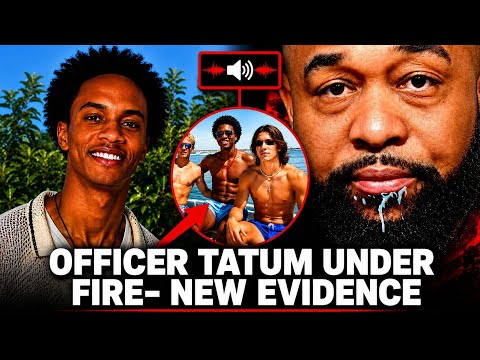
The most consequential material here is the newly emphasized audio from the boat call, particularly because audio engineer Janetta Brantley explains how she isolated channels, raised gain and adjusted frequencies rather than claiming to reconstruct missing speech. Her description gives viewers a clearer idea of what she actually did, and the program importantly acknowledges that she downloaded the publicly released recording rather than obtaining an original evidentiary file directly from investigators. That distinction matters: the enhanced recording may justify closer examination, but neither Brantley nor the program establishes definitively that every perceived word in the background is accurate.
That evidentiary limitation repeatedly collides with the program's much stronger rhetoric. Nancy Grace describes the audio as potentially changing everything and later treats phrases such as references to Nolan, checking someone's chest and asking whether someone is dead as though their meaning is increasingly obvious. Other contributors similarly argue that viewers should trust what they believe they hear. Yet Susan Hendricks briefly raises the genuinely important possibility of auditory suggestion: once listeners are told what words supposedly exist in a noisy recording, ambiguous sounds can become easier to perceive that way. The program would be considerably stronger if it spent more time testing competing transcriptions instead of repeatedly reinforcing the most incriminating interpretation.
The discussion with attorney Franz Borghardt provides one of the more useful moments precisely because he asks what a prosecutor would need to authenticate the recording. He does not accuse Brantley of manipulating it; rather, he notes that she cannot personally establish the complete chain of custody or verify what happened to the file before its public release. Grace aggressively challenges that distinction, but Borghardt's point is legally and evidentially relevant. Demonstrating that an enhancement process was legitimate is not identical to authenticating the underlying recording, and the program sometimes treats skepticism about provenance as though it were an accusation of deliberate fabrication.
The autopsy discussion is more measured when forensic investigator Joseph Scott Morgan explains the limitations created by decomposition and by the second examiner apparently receiving remains after an earlier examination. He discusses the reported discoloration at the back of Wells' head, the absence of identified fractures in the second examination and the importance of toxicology without pretending those points establish a cause or manner of death. The program also reports that the state autopsy has been completed but withheld during an ongoing investigation and possible grand-jury process. Grace repeatedly characterizes that withholding as secrecy, although Morgan offers a less sensational explanation: investigative authorities may legally delay disclosure while proceedings remain active.
Alcohol becomes another area where the panel is at its best when it acknowledges competing interpretations. Morgan correctly frames intoxication, if toxicology ultimately establishes it, as potentially relevant to judgment, physical vulnerability and the circumstances surrounding a death rather than as proof of either accident or homicide. Elsewhere, however, contributors sometimes use rhetorical questions in place of evidence, such as asking why Wells would supposedly be the only intoxicated person to die or why nobody in a crowded area recorded what happened. Those questions may be worth investigating, but crowd size, lack of video and perceived swimming ability do not independently demonstrate foul play.
The section on lie-detection methods is informative in explaining the difference between a traditional polygraph and a possible voice-stress analysis reportedly given to some of the young men. Former FBI polygraph examiner George Alivo describes the physiological measurements used in polygraph testing and emphasizes that question construction matters. Crucially, he also states that no diagnostic technique should be treated as a final verdict. Grace nevertheless places substantially greater confidence in polygraphs than the program's own caution supports, repeatedly suggesting that properly designed polygraphs would meaningfully settle questions surrounding the witnesses. Even within the video's framing, such testing would remain only one investigative tool rather than proof of truthfulness or deception.
The final major development—the alleged threats against people connected to the case—is both concrete and genuinely disturbing. The program identifies federal accusations involving a Sacramento man who allegedly threatened a judge related to one of the young men and an Ohio woman accused of making threatening communications toward Mississippi officials. It also reports that Wells' family has received threats. Here the presentation appropriately condemns intimidation regardless of which side of the controversy is targeted, although the segment's broader confrontational tone sometimes sits uneasily beside that message. The strongest conclusion available from the material presented is not that the mystery has been solved, but that the enhanced audio, unreleased state autopsy, disputed witness accounts and escalating harassment all warrant careful investigation without converting unresolved questions into verdicts.
Pros
- Gives audio engineer Janetta Brantley substantial opportunity to explain the specific enhancement techniques she used and the source of the recording she analyzed.
- Raises a legitimate evidentiary question about authenticating the underlying audio separately from validating Brantley's enhancement process.
- Joseph Scott Morgan provides useful forensic context about decomposition, toxicology, head trauma and the limitations facing a second autopsy.
- Clearly acknowledges that the young men associated with Wells remain innocent unless evidence establishes otherwise.
- Distinguishes traditional polygraph testing from the reported voice-stress method and includes an expert warning that no lie-detection tool should determine guilt.
- Treats threats against Wells' family, other families and officials as unacceptable regardless of their connection to competing theories of the case.
Cons
- Frequently treats disputed interpretations of noisy background audio as increasingly established facts without independent forensic authentication or competing transcription analysis.
- Rhetorical claims that the recording “changes everything” give the enhancement more evidentiary certainty than the program actually demonstrates.
- Skepticism about chain of custody and authentication is sometimes portrayed as implausible obstruction rather than a normal evidentiary concern.
- Crowd size, Wells' reported swimming ability and the absence of publicly known video are repeatedly used to imply foul play despite not establishing what happened.
- Characterizing the unreleased state autopsy primarily as being “kept secret” understates the program's own explanation that investigative or grand-jury considerations may justify delayed disclosure.
- The program places excessive confidence in polygraph testing despite its own expert describing such testing as only one component of an investigation.
- Confrontational exchanges and repeated declarations about what listeners supposedly hear make it harder to separate legitimate investigative questions from speculation.
The enhanced boat audio deserves serious forensic scrutiny, and this program usefully introduces several investigative questions involving authentication, the state autopsy, toxicology and witness testing. Its strongest experts repeatedly explain why those issues remain unresolved, but the surrounding commentary too often moves from disturbing possibilities to implied conclusions before the evidence presented can support them. The result is compelling and potentially important, yet substantially more persuasive as a catalogue of questions than as proof of what happened to Nolan Wells.