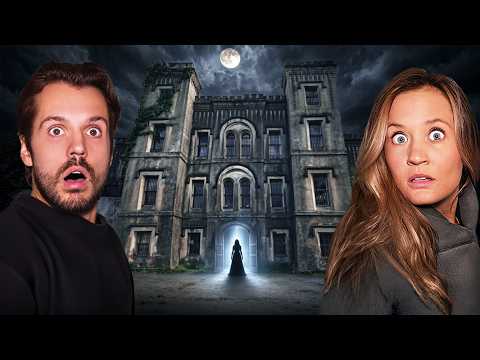
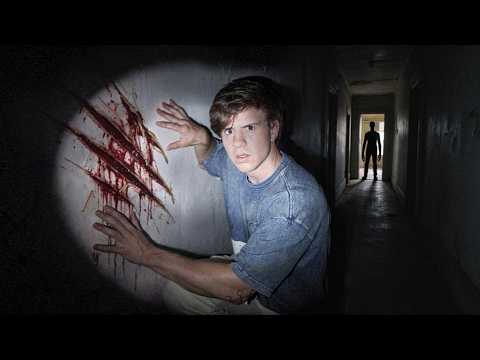
From Bloody Mary and Charlie Charlie to elaborate spirit-summoning rituals involving flashlights, playing cards, and homemade communication devices, Sam and Colby revisit some of the internet's most recognizable supernatural challenges. Rather than treating each activity as an isolated experiment, they connect the games through an ongoing story about their supposedly haunted home and the possibility that previous investigations have attracted unwanted spirits. The result is an energetic collection of creepy games, exaggerated reactions, and unpredictable comedy that works best when approached as paranormal entertainment rather than a serious investigation.
The opening collection of challenges establishes the duo's familiar formula of explaining a ritual, gathering ordinary household supplies, and attempting to provoke something supernatural. The Closet Game uses complete darkness and unexplained tapping noises to create tension, while Don't Look Behind You introduces flashlights that seemingly respond to questions about spirits attached to the participants. These sequences benefit from simple setups that viewers can understand immediately. However, the hosts frequently interpret flashlight activity and ambiguous sounds as evidence of spiritual communication without establishing whether ordinary mechanical or environmental explanations have been ruled out.
The Sandman and Little Devil challenges demonstrate the contrast between the video's comedic and unsettling approaches. The Sandman relies on guided storytelling and physical sensations, producing relatively mild results despite its disturbing premise. Little Devil creates considerably stronger suspense through a homemade board and a suspended needle that appears to spell threatening messages, including references to killing and claims of supernatural authority. Sam and Colby's increasingly nervous reactions make the sequence entertaining, but the movement of a suspended object does not independently establish paranormal involvement. Their interpretation of unclear letters also occasionally shifts to accommodate increasingly dramatic conclusions.
A particularly entertaining stretch introduces a mysterious telephone caller who assigns three rituals under a deadline. The Shoebox Telephone challenge involves a doll associated with the duo's earlier haunted-house experiences, while Scissors and a Book produces uncertain directional movements that the hosts attempt to interpret as yes-or-no answers. Red Door Yellow Door provides a different kind of suspense by using guided visualization to construct an imagined environment filled with strange doors, animals, and threatening figures. The caller's instructions give these activities a loose narrative structure, although the threatened punishment and deadline feel more like theatrical devices than meaningful stakes.
The investigation of their own house brings greater continuity to the collection. Sam and Colby explore their bedrooms, basement recording area, and living room while discussing previously opened dybbuk boxes and an unexplained incident involving window blinds. Their use of the Spirit Talker app generates names, phrases, and ominous statements that they connect to earlier experiences. These connections make the investigation feel increasingly personal, especially when the hosts discuss whether something followed them home. Nevertheless, the app's responses remain open to interpretation, and the account of the blinds moving is an anecdote rather than independently documented evidence of supernatural activity.
The lighter challenges help prevent the extended collection from becoming relentlessly repetitive. The falling-through-the-floor experiment produces a convincing physical illusion for both participants, and their reactions provide an accessible example of how perception can be manipulated without any supernatural explanation. The lights-on-and-off game adds straightforward competition, while Sarah Sarita and the playing-card challenge turn random or subjective outcomes into supposed conversations with spirits. The chemistry between Sam and Colby is consistently enjoyable, with teasing, nervous laughter, and improvised jokes making even unsuccessful rituals watchable. Their willingness to acknowledge when an experiment fails, particularly during Bloody Mary and Queen of Spades, also provides occasional welcome restraint.
The biggest weakness is the compilation's uneven pacing and repeated reliance on similar paranormal devices. Multiple segments return to the same claims about haunted bedrooms, attached spirits, and dangerous entities, often without developing those ideas beyond another ambiguous response. Calls to subscribe, merchandise references, and an extended Raycon sponsorship interrupt the atmosphere, while repeated explanations of earlier events make the overall presentation feel loosely assembled. The hosts' tendency to escalate uncertain observations into dramatic supernatural conclusions further limits credibility. Even so, the variety of rituals, occasional genuinely eerie coincidences, and strong comedic partnership provide enough entertainment to sustain interest across a lengthy collection.
Pros
- Sam and Colby's natural chemistry makes the challenges entertaining through humor, teasing, and spontaneous reactions.
- The collection features a wide variety of recognizable paranormal games alongside several less familiar rituals.
- The Closet Game and Little Devil sequences create effective suspense through darkness, uncertainty, and unsettling responses.
- The mysterious telephone caller introduces a creative narrative framework that gives several challenges a shared purpose.
- The Red Door Yellow Door experiences offer imaginative storytelling that differs from the more conventional spirit-communication experiments.
- The investigation of the hosts' home provides continuity by connecting current experiences with their earlier paranormal activities.
- The falling-through-the-floor experiment offers a memorable demonstration of unusual physical sensations without requiring a supernatural explanation.
Cons
- Ambiguous flashlight activity, suspended-object movements, and app-generated words are repeatedly treated as meaningful paranormal evidence without sufficient verification.
- The extensive collection becomes repetitive as multiple rituals follow nearly identical patterns of questions, uncertain responses, and exaggerated reactions.
- The hosts sometimes construct elaborate supernatural explanations from incomplete messages and subjective interpretations.
- Sponsorship material, merchandise promotions, and frequent subscription requests interrupt the suspense.
- The compilation lacks a strong overarching progression, with several segments repeating earlier information or revisiting unresolved claims.
- Some ritual outcomes depend heavily on chance or participant influence, making the apparent communication less convincing than the hosts suggest.
Sam and Colby deliver an entertaining marathon of supernatural challenges that succeeds through personality, variety, and a playful willingness to embrace bizarre situations. The darker rituals and guided visualization sequences provide memorable moments, while the lighter games keep the experience from becoming excessively serious. Repetition, promotional interruptions, and unconvincing paranormal interpretations prevent the collection from achieving greater impact, but viewers looking for spooky entertainment rather than rigorous evidence will find plenty to enjoy.