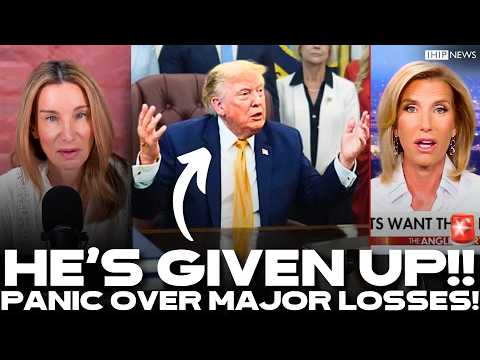
A late-night U.S.-China trade announcement gives the commentary one of its more substantive targets, as the host questions what the administration’s “30 for 30” framework actually accomplishes. He reads through the announcement’s language about proposed product lists and future consideration, arguing that it sounds more like a framework for negotiations than a completed trade agreement. That skepticism is worth exploring, but calling the announcement “raw, unadulterated fraud” goes considerably further than the material presented establishes.
That pattern defines much of the presentation. Clips and purported official statements provide concrete material to discuss, but potentially useful criticism is frequently surrounded by insults about Donald Trump’s age, appearance, mental state and character. Footage from the Presidents Cup is repeatedly interpreted as evidence that Trump is lost or impaired, while an ambiguous physical interaction with a golfer is framed as possibly involving the golfer’s crotch. The host does acknowledge uncertainty by inviting viewers to judge the footage themselves, yet the provocative interpretation receives far more emphasis than the uncertainty warrants.
Economic policy produces a more worthwhile discussion. The host connects rising oil, gasoline and diesel prices with Trump’s comments about potentially restricting diesel exports, then argues that an export ban could distort refinery incentives and ultimately push fuel prices higher. There is at least a recognizable economic argument here involving global supply, refinery output and the relationship between gasoline and diesel production. However, the projected consequences are presented with considerable confidence and without enough supporting data in the segment to demonstrate that events would unfold exactly as predicted.
The international material expands rapidly from Iran and Yemen to China, Taiwan, Japan, Romania, Venezuela, Brazil and Iraq. Several allegations are attributed to reports or unnamed sources, including claims about Trump’s discussions with Xi Jinping and an extraordinary account involving U.S. interference in Romania. These are consequential assertions that require careful sourcing and context, yet they often pass quickly before the commentary moves to another country or crisis. Showing protest footage can illustrate that demonstrations occurred, but images of crowds alone cannot establish all of the political conclusions attached to them.
The strongest late segment concerns reports that eight Marines suffered traumatic brain injuries after a tanker was struck. The host appropriately treats brain injuries as something that should not be casually dismissed and connects the report to his criticism of how military casualties are publicly characterized. The analysis becomes much less reliable, however, when eight reported injuries are used to reinforce a prediction that “thousands” of American service members have suffered traumatic brain injuries in a wider cover-up. He explicitly identifies that larger number as his belief, but no evidence presented here demonstrates it.
The episode ultimately functions better as rapid-response partisan commentary than as a carefully established news analysis. The host has legitimate questions about opaque trade language, fuel policy, military casualties and the consequences of escalating conflicts, and his energetic delivery makes a sprawling collection of developments easy to follow. Yet the repeated movement from observable material to maximal conclusions—combined with personal ridicule, speculative interpretations and major allegations that receive limited substantiation—makes it difficult to separate the strongest criticism from the rhetoric surrounding it.
Pros
- Directly examines the language of the U.S.-China trade announcement rather than merely characterizing it.
- Raises substantive questions about diesel-export policy, refinery incentives and the consequences of rising fuel prices.
- Treats reported traumatic brain injuries among service members as deserving serious attention rather than dismissive terminology.
- Uses clips and specific examples throughout, giving viewers some opportunity to assess portions of the underlying material themselves.
Cons
- Personal attacks about Trump’s age, appearance and mental condition repeatedly substitute ridicule for evidence-based criticism.
- Ambiguous golf footage is given a highly provocative interpretation that the material described does not conclusively establish.
- Serious geopolitical allegations involving China, Romania and other countries are presented with insufficient sourcing and context.
- Economic predictions are delivered with more certainty than the supporting evidence provided in the segment justifies.
- The claim that thousands of U.S. service members may have suffered concealed traumatic brain injuries is explicitly speculative and is not demonstrated by the reported case involving eight Marines.
- Rapid shifts among numerous international stories limit the depth available for verifying or explaining any one of them.
There are legitimate subjects here for aggressive scrutiny, particularly opaque trade announcements, fuel policy and the treatment of injured service members. The commentary is most persuasive when it stays anchored to documents and identifiable clips, but speculation, personal ridicule and sweeping conclusions repeatedly weaken those stronger moments. A more disciplined separation between what is shown, what is reported and what the host believes would make the analysis substantially more credible.