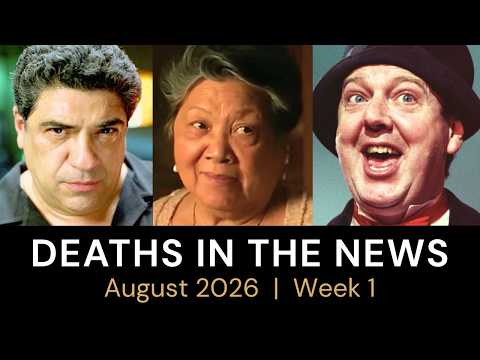
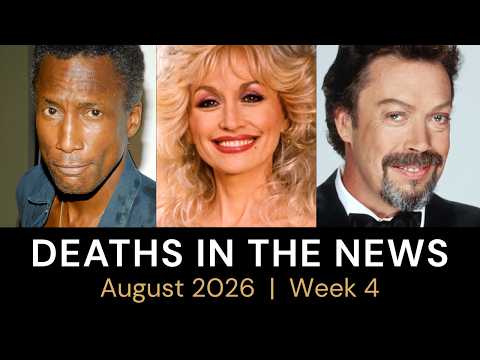
A weekly obituary roundup risks becoming little more than a sequence of names, ages, and career highlights, but this edition tries to give each death enough context to explain why the person mattered. Louise Lasser's television career, Kjell Nilsson's memorable villain role, George Johnson's business legacy, Lauren Bennett's music, Keith Mitchell's football career, and several other deaths move quickly across entertainment, sports, and entrepreneurship. The concise format works well for breadth, though it necessarily reduces complex lives to a handful of recognizable accomplishments and leaves little room to explore the circumstances or significance of individual careers in depth.
The strongest entries identify a contribution beyond simple celebrity. George Johnson is remembered not only for building Johnson Products around brands such as Ultra Sheen and Afro Sheen, but also for sponsoring Soul Train and founding Independence Bank of Chicago. Keith Mitchell's transition from professional football into writing, wellness coaching, and yoga similarly gives his entry a sense of life after sports. Joby Baker's movement from acting to art and Leroy Irvin's football records provide other examples of the video looking for a defining legacy rather than simply listing credits. That approach makes the roundup feel more like condensed obituary writing than entertainment-news trivia.
Medical information is generally handled with appropriate restraint. Kidney disease, respiratory illness, natural causes, throat cancer, and death following surgery are reported where the video provides them, while Lauren Bennett and Keith Mitchell are explicitly described as having no announced cause of death. That distinction is important in a format dealing with recent deaths, where incomplete information can invite speculation. The presentation does not attempt to fill those gaps or infer causes from circumstances, and its matter-of-fact delivery keeps the focus on the deceased rather than sensationalizing how they died.
The shift from nationally known figures to family-written Legacy stories is the episode's most effective editorial choice. Larry Bigman's motorcycles, NASA-related photographic work, and advice about happiness; Jacqueline Lee Barfield's imagined archaeological interests and possessions; and Carl Martin Bergamon's military service, marathon running, and impact on others bring the concept of legacy down from celebrity accomplishment to personal memory. The host's reflection that Bergamon's emphasis on the lives he touched resonates more as he gets older adds a rare personal note without overwhelming the stories themselves. It also reinforces the site's broader purpose: obituary writing is presented as preserving what made a life distinctive, whether or not that person was famous.
The anniversary section expands the scope further through Biz Markie, Red Buttons, Harry Chapin, Gerald Levert, Harry Dean Stanton, and Ginger Rogers. Mixing death anniversaries with milestone birthdays provides a useful reason to revisit figures from different generations, but the entries are even more compressed than the current obituaries. Familiar works and achievements efficiently orient viewers, yet the rapid procession can begin to resemble a reference list rather than remembrance. The structure favors consistency and accessibility over deeper reflection, which is understandable for a weekly series but limits how memorable some individual segments can become.
Ending with half-staff flag honors is a valuable expansion of the video's definition of public loss. The three wildland firefighters who died battling a Mesa County wildfire, Sergeant Scott Rees, former Ohio state senator Kenneth R. Cox, and Fire Chief David A. Ganyon receive recognition alongside entertainers, athletes, and business figures. This section is brief, but it prevents fame from becoming the sole criterion for inclusion and acknowledges public servants whose deaths prompted official mourning. The closing invitation to read fuller biographies on Legacy.com is also more justified here than a generic promotional ending because the short video format cannot provide comprehensive obituaries for everyone it mentions.
Pros
- The roundup covers entertainment, sports, business, music, public service, and ordinary family memorials without treating celebrity as the only form of meaningful legacy.
- Individual entries usually identify a distinctive accomplishment or later chapter rather than relying solely on names, ages, and famous credits.
- Unannounced causes of death are clearly identified as unknown rather than filled with speculation.
- The family-written tributes provide the episode's most personal material and effectively broaden the idea of remembrance beyond nationally recognized figures.
- Anniversary segments connect current obituary coverage with notable figures from earlier generations.
- The half-staff section gives firefighters, law enforcement, and other public figures a place within the week's remembrance.
Cons
- The rapid succession of current deaths leaves limited room to explain the larger significance of many careers or contributions.
- Career summaries often depend on a few recognizable works, awards, records, or associations, which can make complex lives feel compressed into résumé highlights.
- The anniversary section adds useful breadth but moves quickly enough that several remembrances feel more informational than reflective.
- Because the presentation repeatedly directs viewers to Legacy.com for fuller obituaries, much of the supporting detail behind its biographical and medical information remains outside the video itself.
- The format becomes somewhat repetitive as entries repeatedly move from death details to a principal achievement and then another remembered contribution.
The episode succeeds most when it treats remembrance as something broader than reporting which celebrities recently died, particularly through family-written tributes and official honors for public servants. Its weekly format inevitably compresses substantial lives into brief summaries, but the restrained handling of unknown causes of death, emphasis on defining contributions, and willingness to place ordinary personal legacies beside famous careers give the roundup a respectful purpose beyond simply cataloging loss.