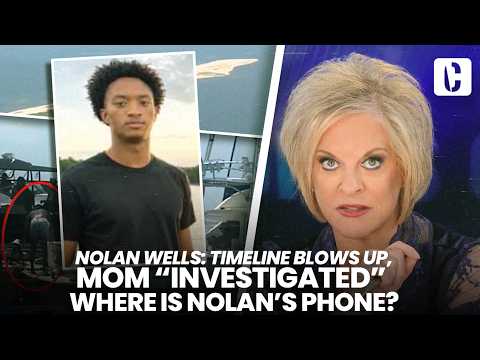
The strongest development here is also the least theatrical: Nolan Wells’ family is seeking records from Snapchat, WhatsApp, TikTok, Meta platforms and Life360 in an effort to determine what his digital activity can establish about the hours surrounding his death. That gives the discussion a potentially productive evidentiary focus. Rather than relying entirely on recollections, interpretations of noisy audio or assumptions about how a teenager normally used his phone, provider records and a proper forensic examination could help establish what activity occurred, when it occurred and whether material was deleted. Importantly, the experts also explain that these records have limits and may not answer every question.
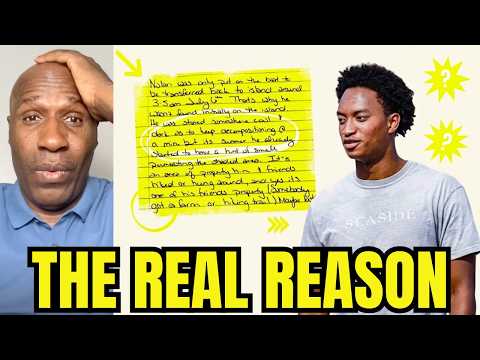
Much of the episode revolves around a genuine conflict in the available narratives. Brandon Tatum says four young men he interviewed showed him videos, photographs, call records and messages that he believes support their account, including their assertion that Nolan was not aboard the returning boat. He also says there were witnesses placing Nolan on Horn Island after the boat left. Those are significant claims, but viewers are largely hearing Tatum describe evidence rather than receiving an independent authentication of it here. Nancy Grace is therefore justified in refusing to treat either the young men’s explanations or suspicions about them as settled fact.
The discussion of the troubled boat demonstrates both the program’s persistence and its tendency toward speculation. A call describes the boat as taking on water, while subsequent movement of the vessel raises questions for commentators about how disabled it actually was. Tatum offers a detailed explanation involving the bilge, batteries, towing, draining water and plugging a hole, saying the young men physically demonstrated the sequence to him. That provides a plausible competing account, but the program cannot resolve the dispute merely by contrasting online interpretations with Tatum’s reconstruction. The repeated emphasis on ambiguous background phrases supposedly referring to Nolan is similarly intriguing without being conclusive.
The medical discussion is handled somewhat more carefully. Grace repeatedly returns to reddening documented at the back of Nolan’s head and treats it as a major unresolved concern, but Joseph Scott Morgan supplies an essential restraint: the investigation remains incomplete, decomposition has complicated interpretation, and additional tissue studies and toxicology are pending. He also says a second forensic pathologist could not determine the significance of the area at this stage. That uncertainty matters. An unexplained finding can justify further investigation without establishing that Nolan suffered an assault or identifying how he died.
The digital-forensics section is the episode’s most informative material. Jim Jones clearly distinguishes records obtained from service providers through subpoenas from a forensic acquisition of the physical phone. He explains that deleted material may leave logs or fragments, that recoverability can decline unpredictably over time, and that provider records could potentially be compared with the device to identify discrepancies. He also makes a particularly useful evidentiary distinction about connectivity: successful server activity could demonstrate that service existed at a particular time, while the absence of such activity would not prove there was no reception. That is exactly the kind of qualification the broader discussion needs more often.
Unfortunately, some of the surrounding technical discussion is less precise. Titania Jordan characterizes Snapchat as having been developed to send disappearing nude images and broadly suggests that supposedly disappearing media remains available in Snapchat’s possession, but those claims are not adequately established or qualified within the program. WhatsApp encryption is also discussed in broad terms that risk making a complicated question of what providers can retain or produce sound simpler than it is. Grace does a better job when she slows the experts down and asks what investigators can actually learn from specific records, rather than treating every form of digital activity as equally recoverable.
Tatum is useful because he presents evidence and explanations that challenge some of the more suspicious interpretations circulating around the case, but he becomes substantially less persuasive when he moves from reporting what the young men showed him to judging their credibility. Calling them intelligent, well-raised young men and reasoning that guilty people would presumably have destroyed or reset Nolan’s phone is speculation about how hypothetical offenders would behave, not corroboration. The exchange over supposed polygraphs is another cautionary moment: the claim retreats from polygraph tests to voice-stress analysis after questioning, and even the participants acknowledge uncertainty about the evidentiary value of such testing. Grace’s insistence that nobody’s account should be accepted without investigation is one of the episode’s soundest principles, even though her own presentation frequently uses dramatic language that can pull viewers toward suspicion before the evidence has settled it.
Pros
- The newly issued subpoenas give the episode a concrete investigative development rather than relying solely on previously circulating theories.
- Jim Jones provides clear, useful distinctions between provider records, device forensics, deleted-data remnants and evidence of cellular connectivity.
- Brandon Tatum presents substantive counterarguments and describes evidence that he says supports the young men’s version of events.
- Joseph Scott Morgan appropriately emphasizes that the forensic findings remain unresolved while additional analysis is pending.
- Grace repeatedly refuses to declare the young men either guilty or innocent before the evidence is corroborated.
Cons
- Important evidence described by Tatum, including videos, messages and witness information, is treated extensively without independent authentication being established within the program.
- Ambiguous audio and boat movements generate considerable speculation despite remaining open to competing interpretations.
- Tatum’s assessment of the young men’s character and his theory about what guilty people would have done with Nolan’s phone are weak substitutes for evidence.
- The discussion initially conflates polygraph testing with voice-stress analysis before the distinction is finally clarified.
- Some claims about Snapchat’s origins, retained content and social-media companies’ ability to provide data are presented more categorically than the discussion supports.
- Grace’s highly dramatic rhetoric sometimes competes with the otherwise appropriate message that the cause and circumstances of Nolan’s death remain under investigation.
The episode is most valuable when it moves away from competing suspicions and explains how digital records could test them against objective evidence. Its forensic and technical guests introduce important limits that keep several intriguing details from becoming premature conclusions, although speculation and overstated technical claims periodically undermine that discipline. The subpoenas may ultimately clarify important parts of the timeline, but this presentation itself does not establish what happened to Nolan Wells.