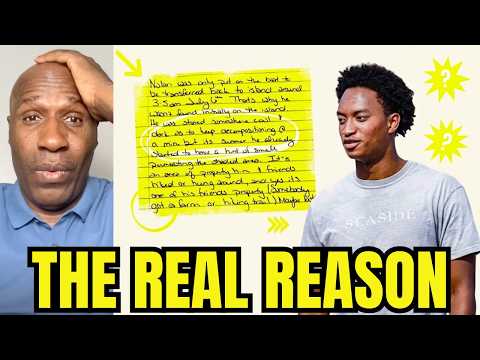
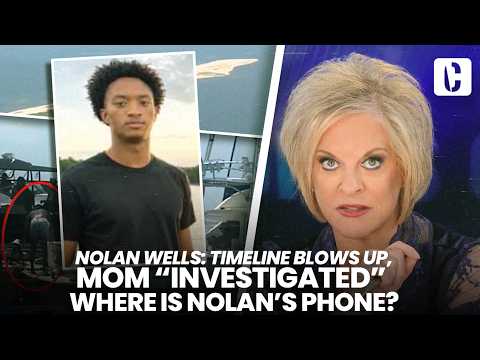
The central concern here is not a new piece of forensic evidence but the increasingly public struggle over how Nolan Wells' death should be understood before investigators have provided definitive answers. Don Lemon and attorney Charles Coleman Jr. focus heavily on interviews given by Wells' friends and their lawyers, questioning why people who could potentially become relevant to a criminal proceeding are making repeated public statements. That framing gives the discussion a clear theme: when official information is scarce, attorneys, families, commentators and online personalities can all begin competing to fill the vacuum with their own version of events.
The most useful portion examines the friends' rejection of interpretations surrounding the Sea Tow call. They argue that video from the boat shows everyone behaving casually, that Wells was not visibly aboard, and that calling Sea Tow or the Coast Guard would make little sense if they had harmed him. Those are arguments offered by the participants rather than established proof of innocence, and Coleman appropriately avoids declaring them guilty. His more limited point is that repeatedly asking why someone would have behaved a certain way invites viewers to infer innocence from assumptions about how a guilty person supposedly behaves, when human behavior is rarely that predictable.
Coleman's legal analysis is strongest when it stays focused on the risks of public communication. He argues that extensive interviews could create statements later contested over admissibility, expose inconsistencies, or influence potential jurors before any trial. His suggestion that the appearances might function as a preemptive appeal to a future grand jury or trial jury is plausible as analysis, but it remains speculation about strategy. At several points he goes further by describing the interviews as an attempt to generate sympathy or "poison" a jury pool, conclusions that the program cannot establish simply from the appearances themselves.
That tension becomes more pronounced during the discussion of harassment reportedly experienced by the young men. The interview excerpts describe alleged death threats, confrontations in public and one friend reportedly being denied service at a store. Lemon and Coleman reasonably question the contrast between saying they want privacy to mourn and voluntarily participating in a major interview, but the segment sometimes treats that contradiction as more revealing than it necessarily is. People can simultaneously dislike public attention and believe speaking publicly is necessary, and reported threats do not become insignificant merely because another family has suffered the far greater loss of a death.
The later discussion demonstrates more effectively how uncertain facts can quickly harden into competing narratives. A NewsNation exchange raises claims about water found in Wells' body, possible drowning and alcohol, while repeatedly acknowledging that those details are not yet conclusive. Another interview contains assertions that Wells' family had not cooperated in providing his phone to authorities. Lemon then presents a letter from attorneys representing the Wells family stating that they remained willing to arrange a joint forensic examination of the device and had discussed possible laboratory and FBI involvement. Within the material presented, that letter provides a meaningful counterpoint to the suggestion of noncooperation without resolving the larger dispute over what investigators possess or have requested.
Natalie Moungay's contribution broadens the discussion beyond courtroom strategy by emphasizing how repetition across large media platforms can shape public perception regardless of whether the underlying information has been verified. That observation fits the program's larger argument well, particularly because multiple clips feature speakers mixing known details, personal interpretations and hypothetical explanations. Yet the show is not entirely outside that same dynamic. Lemon and Coleman repeatedly speculate about motives, possible inside information from law enforcement and deliberate narrative manipulation, so their warning about conjecture applies in part to their own discussion as well.
The most persuasive conclusion comes when Coleman attributes much of the media battle to the lack of regular information from the Jackson County Sheriff's Office and urges viewers to distinguish vetted facts from commentary. That is a stronger standard than trying to decode clothing choices, interview venues or rhetorical habits as indicators of legal strategy. Lemon also repeatedly states that the program does not know what happened to Wells and explicitly rejects declaring the young men guilty, an important qualification given the emotional and potentially consequential nature of the case. The episode nevertheless spends enough time interpreting motives and communications strategy that viewers still need to separate documented developments from the hosts' theories about why various participants are behaving as they are.
Pros
- Keeps the crucial question of guilt or innocence unresolved rather than presenting allegations against Wells' friends as established fact.
- Provides useful legal analysis of the risks associated with extensive public interviews before a possible criminal proceeding.
- Directly contrasts claims of family noncooperation over Wells' phone with a letter stating willingness to coordinate a forensic examination.
- Effectively illustrates how incomplete official information can allow competing media narratives and speculation to dominate a case.
- Moungay adds a relevant communications perspective on how repeated claims can gain influence through amplification across large platforms.
Cons
- Several theories about influencing jurors, obtaining inside information from law enforcement and deliberately shifting sympathy are speculative rather than demonstrated.
- The analysis sometimes assigns substantial significance to rhetorical choices, interview settings and even the attorney's presentation without enough evidence to establish intent.
- Reported harassment of the young men is occasionally minimized by comparing it with the much greater tragedy suffered by Wells' family rather than evaluating the allegations independently.
- The program criticizes other participants for filling information gaps with conjecture while engaging in considerable conjecture of its own.
- Repeated promotional interruptions and calls to subscribe, buy merchandise and attend live events dilute the focus of an already complicated discussion.
This is a useful examination of how an unresolved death investigation can become a contest over public perception when authoritative information remains limited. Its strongest moments distinguish documented developments from unresolved claims and explain the legal risks of aggressive media strategies, while its weakest moments infer motives with more confidence than the available evidence supports. The episode is most valuable as a critique of the surrounding information environment rather than as evidence for any conclusion about what happened to Nolan Wells.