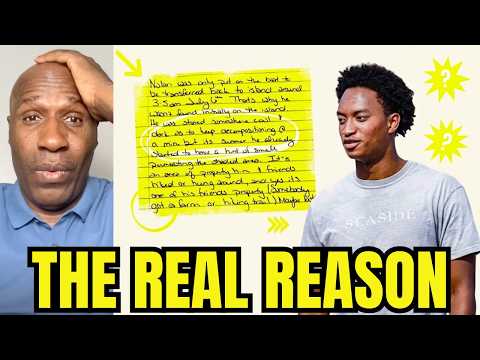
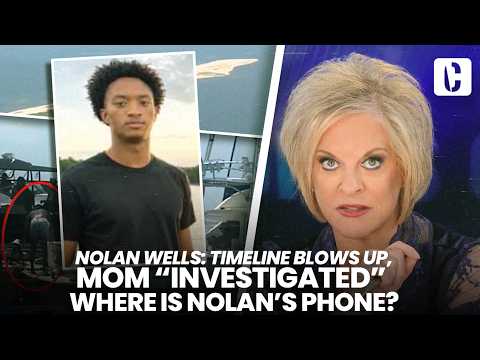
Six years without a recorded drowning at Horn Island becomes the central argument for questioning what happened to 19-year-old Nolan Wells. Nancy Grace repeatedly contrasts that history with suggestions that Wells accidentally drowned after swimming away from a July 4 gathering or somehow falling asleep in the water. The absence of recent drownings is certainly relevant context, but the presentation pushes it too far when Grace says an accidental death “defies probability.” A rare event does not become implausible simply because it has not occurred recently, particularly without knowing how many people entered the water during those six years or how comparable their circumstances were.
The discussion becomes much stronger when oceanographer Steven DiMarco addresses the physical conditions rather than attempting to reason backward from the drowning statistics. Based on the imagery and conditions described, he sees little indication of the wind and wave activity commonly associated with dangerous rip currents, while emphasizing that he does not have the necessary observational data to rule anything out. He also explains that Horn Island's varying depths and channels can redirect or accelerate water and that a drowned person could potentially reach shore later. Those qualifications are valuable because they resist Grace's repeated attempts to turn apparently calm conditions into a definitive rejection of accidental drowning.
That tension produces some of the program's most revealing exchanges. Grace points to people standing chest-deep near the gathered boats and argues that the scene does not look dangerous, while DiMarco carefully distinguishes appearances from measured oceanographic evidence. The footage may undermine an unsupported assertion that a powerful rip current was obviously present, but it cannot establish exactly what currents existed when and where Wells disappeared. DiMarco's insistence on data provides a welcome scientific restraint that the surrounding commentary does not always maintain.
The unexplained phone receives more persuasive attention. Wells' family reportedly possesses the device and wants to be present when investigators examine it, yet more than nine weeks after his death the analysis described here still has not occurred. An acquaintance says some phone service was available on Horn Island, while Grace reports that Wells' mother considered his apparent lack of calls, messages, photos and other activity unusual. Digital evidence could potentially clarify his movements and communications, but attorney Greg Morse correctly challenges the assumption that the unknown contents necessarily indicate something nefarious and questions why defense attorneys would participate when nobody has been identified as a suspect.
Forensic delays provide another legitimate avenue of scrutiny. Joseph Scott Morgan argues that investigators determining cause and manner of death should consider scene information, witness accounts, behavior, toxicology and other circumstances alongside the physical examination. He also considers the reported delay in toxicology results unusually long. Grace says a source indicated that cocaine was not found in Wells' system, but because the official medical examiner's findings are not presented, that remains a reported claim rather than a resolved forensic fact. The same caution applies to questions about decomposition, the body's appearance and precisely how Wells reached the location where he was found.
The program ultimately identifies a substantial collection of unanswered questions without establishing a competing explanation for Wells' death. Where was he during the roughly two days before his body was discovered? What does his phone contain? What will the official toxicology and medical examiner findings show? Were the relevant water conditions actually measured? Those are reasonable investigative questions, and continued scrutiny is justified by the uncertainties described here. The weakness comes when unanswered questions, unusual circumstances and a six-year drowning record are rhetorically treated as evidence against an accident before the missing forensic and digital evidence has supplied an answer.
Pros
- Brings an oceanographer into the discussion to assess whether the described weather, waves and currents support claims about dangerous rip conditions.
- DiMarco repeatedly acknowledges the limitations of drawing conclusions without actual current and environmental data.
- Identifies the still-unexamined phone as potentially important evidence that could clarify Wells' communications and activity.
- Morgan clearly explains why cause-of-death analysis should incorporate circumstances, witness information and toxicology alongside the body itself.
- Morse provides useful resistance to assumptions about what the phone contains and explains why hypothetical defense participation is not straightforward when no suspect has been identified.
Cons
- Repeatedly treats six years without a recorded Horn Island drowning as statistically powerful evidence without providing the exposure data needed to calculate any meaningful probability.
- Grace sometimes presses the oceanographer's cautious observations further than his evidence supports, turning “not obviously conducive” to dangerous currents into a stronger argument against accidental drowning.
- The presentation repeatedly ridicules accidental scenarios even though it does not establish what actually happened to Wells.
- Claims about toxicology and the absence of cocaine rely on an unidentified source rather than the official medical examiner's findings.
- Questions surrounding the body's location, appearance and delayed discovery are presented as suspicious without enough evidence to determine whether they are inconsistent with drowning and subsequent water movement.
- The lengthy financial advertisement interrupts an already complicated forensic discussion at an awkward point.
The unresolved phone evidence, delayed forensic information and uncertain water conditions provide legitimate reasons to keep asking questions about Nolan Wells' death. The investigation-focused discussion is strongest when its experts explain what evidence would actually help, but considerably weaker when rarity and uncertainty are treated as affirmative evidence against an accidental drowning. Greater statistical and forensic restraint would make the case for continued scrutiny more convincing.