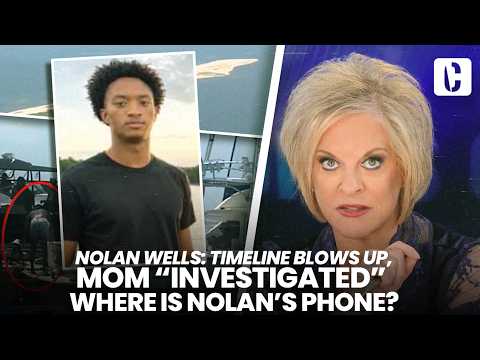
Newly described phone data gives the Nolan Wells case a more concrete investigative focus than the social-media disputes surrounding it. The presentation says forensic experts working with the family recovered 282 pages of Snapchat material and reconstructed movements associated with Nolan’s phone, including activity on Horn Island and the device’s subsequent travel. Those details are potentially significant, but they are presented through statements attributed to the family’s legal and forensic team rather than through the underlying reports themselves, making it important to treat them as reported findings rather than independently established conclusions.
The centerpiece is an extended, profanity-heavy exchange involving Nolan’s aunt Tashima, whose frustration with online speculation is unmistakable. She insists that after receiving Nolan’s phone, neither she nor anyone around her accessed or deleted material from it, and she describes being primarily concerned with locating a boat she had been told was taking on water. Her account also introduces a potentially important discrepancy: she says she was directed to a boat that appeared never to have been in the water, despite having been told about a sinking or waterlogged vessel. The conversation provides useful firsthand context about what she says she did that day, although the chaotic panel format makes portions difficult to follow.
Tashima is considerably clearer when discussing the limits of her knowledge. She repeatedly says she does not know what happened on Horn Island, does not claim to know which person did what, and can speak confidently only about her own actions and those of her son. That restraint matters because much of the surrounding discussion involves suspicion, rumor, deleted communications, competing recollections, and attempts to reconstruct movements after the fact. Her anger occasionally overwhelms the substance, but her refusal to turn uncertainty into a specific accusation is one of the more responsible elements of the exchange.
The host eventually characterizes much of the interpersonal conflict as misunderstanding amplified by people carrying comments between private messages and livestream panels. That is a sensible distinction, and the commentary is strongest when it separates those online feuds from the central evidentiary question. The same applies to Tashima’s statement that neither Nolan nor her son knew Katie before the Horn Island outing. Her account directly addresses speculation about Nolan and Katie’s relationship, but it remains a family member’s assertion rather than independent proof of every interaction Nolan may have had.
Where the presentation becomes less disciplined is in its treatment of other claims surrounding Nolan. The host strongly rejects allegations that Nolan used cocaine and contrasts claims that he had been drinking with an account from a coach who reportedly did not believe Nolan appeared intoxicated. Yet the segment does not provide toxicology findings, source documents, or enough independent evidence to conclusively resolve all questions about substance use. Criticizing unsupported rumors is appropriate; replacing them with equally confident conclusions based on incomplete material is less persuasive.
The closing portion also shifts noticeably from analysis into advocacy. The host promotes a proposed million-dollar reward, cites more than $25,000 raised at the time of the recording, urges viewers to donate, and speculates that a sufficiently large reward could persuade someone with information to come forward. Supporting the family is clearly central to the channel’s perspective, but the fundraising appeal consumes substantial attention that could have been spent more carefully examining the newly described phone timeline, the recovered Snapchat material, and what those findings can and cannot establish. Suggestions about why anyone might oppose or attempt to remove the reward campaign are also raised rhetorically without evidence identifying a motive.
Pros
- The reported forensic extraction and phone-location timeline introduce specific evidence that is more substantive than the surrounding social-media speculation.
- Tashima provides a detailed firsthand account of receiving Nolan’s phone, searching for the reported boat, and what she says occurred afterward.
- The discussion appropriately emphasizes that Tashima does not claim to know what happened on Horn Island or accuse a specific person of causing Nolan’s death.
- The host eventually distinguishes interpersonal livestream drama from the more important question of what evidence can establish about Nolan’s final hours.
Cons
- The lengthy, overlapping livestream confrontation is frequently difficult to follow and allows personal disputes to overshadow the potentially important forensic material.
- Several consequential claims are discussed without presenting the underlying forensic reports, medical documentation, toxicology evidence, or other primary material needed to independently evaluate them.
- The host sometimes moves from criticizing unsupported speculation to making confident assertions that are themselves not fully demonstrated by the material presented.
- The extended fundraising appeal and rhetorical speculation about opposition to the reward campaign dilute what could have been a tighter evidence-focused examination.
The most valuable material here is not the livestream conflict but the emerging digital timeline and the family’s firsthand account of events surrounding Nolan’s phone. Those details could prove important, yet the presentation would be considerably stronger with less interpersonal drama and a stricter separation between documented findings, family recollections, unresolved allegations, and the host’s interpretations. As an update on a still-unresolved case, it contains meaningful information but too often lets advocacy and online conflict compete with the evidence.