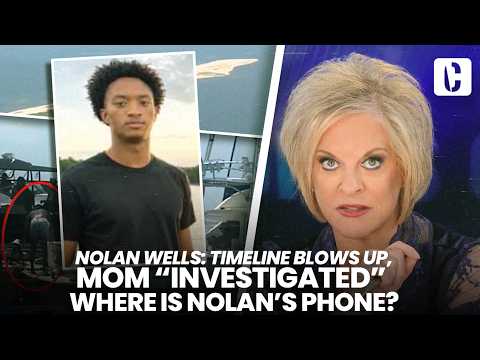
The most consequential material in this episode is the officially released distress-call recording, which appears to contain faint background voices while a caller reports that the boat is taking on water. Nancy Grace and her panel repeatedly replay the audio and identify possible phrases concerning Nolan Wells, including expressions that could suggest someone was attempting to wake him. Those interpretations are potentially significant, but the recording remains difficult to understand, and the episode does not present a completed forensic analysis confirming the exact words, speakers, or circumstances.
The discussion is appropriately alert to the dangers of manipulated material circulating online. The program distinguishes the government-sourced call from unrelated videos and recordings that have been falsely attributed to Nolan, including footage of another young man and disputed audio involving someone demanding the return of a phone. That caution is valuable, although the presentation occasionally moves too quickly from authenticating the source of the distress call to treating uncertain interpretations of its background noise as evidence of what occurred aboard the boat.
A second important line of inquiry concerns the reported mechanical emergency. The panel compares the caller’s claim that the vessel was sinking with information suggesting the problem was resolved within minutes and that the boat later made several movements between docks and other locations. This apparent inconsistency deserves investigation, but the episode cannot establish from the available timeline whether the original report was false, exaggerated, temporarily accurate, or resolved through intervention not fully described. Questions about mobile reception and phone use are similarly relevant without proving that Nolan personally had service or was using his device.
The segment involving the United Cajun Navy provides a useful correction to claims that Nolan’s family rejected a search involving scent or cadaver dogs. The organization says it offered assistance through members of the family’s legal team, while Grace correctly emphasizes that neither the family nor its attorneys could authorize a search of a boat they did not own. The panel’s broader recommendations about separating witnesses, recording interviews, seeking warrants, and considering canine searches are presented as investigative possibilities rather than confirmed omissions, though some contributors express suspicions about the young people aboard more strongly than the established evidence supports.
The medical discussion is among the episode’s most informative sections because forensic pathologist Dr. Thomas Coyne repeatedly resists Grace’s more dramatic interpretations. He explains that retaining neck structures could permit closer examination for injury when decomposition complicates the distinction between trauma and postmortem changes. He also challenges the suggestion that redness at the back of the neck necessarily indicates bruising, describing several possible artifacts associated with decomposition, positioning, transportation, and a prior autopsy. Grace continues to imply that the retained throat must indicate a particular concern, but the doctor presents it only as one plausible explanation pending complete findings.
The account attributed to a woman identified as Katie introduces another apparent contradiction: she reportedly believed Nolan was leaving with his companions rather than remaining on the island with her. Her cooperation with investigators makes the statement relevant, yet it is relayed through her sister and the panel rather than examined directly in the episode. The closing acknowledgments of threats against Nolan’s family, the other passengers, and law enforcement provide an important reminder that public speculation has real consequences. Unfortunately, the program’s urgent “bombshell” framing and repeated declarations that the audio could transform the investigation risk intensifying precisely the hostile climate it warns against.
Pros
- Closely examines an officially released distress call while acknowledging the existence of falsely attributed and manipulated material online.
- Identifies meaningful unresolved issues involving the reported boat emergency, later vessel movements, phone access, and conflicting accounts of Nolan’s plans.
- Corrects misleading suggestions that Nolan’s family had the authority to approve a canine search of someone else’s boat.
- Includes a forensic pathologist who offers careful alternative explanations for retained anatomical structures and postmortem discoloration.
Cons
- Treats highly ambiguous background audio as increasingly suggestive before any completed forensic enhancement or verified speaker identification is presented.
- Several panelists imply guilt or investigative failure despite repeatedly acknowledging that crucial interviews, reports, and autopsy findings remain unavailable.
- The sensational presentation can blur the distinction between legitimate questions, plausible theories, and evidence capable of supporting a conclusion.
- Repetition, advertisements, and extended confrontational exchanges weaken the clarity of an otherwise important examination of unresolved evidence.
This episode surfaces several discrepancies that investigators may need to reconcile, but its strongest evidence remains incomplete and open to competing interpretations. The official recording, boat timeline, witness account, and forensic questions justify continued scrutiny, while the program’s tendency to amplify uncertain audio and speculative implications prevents the discussion from delivering the definitive breakthrough its framing promises.