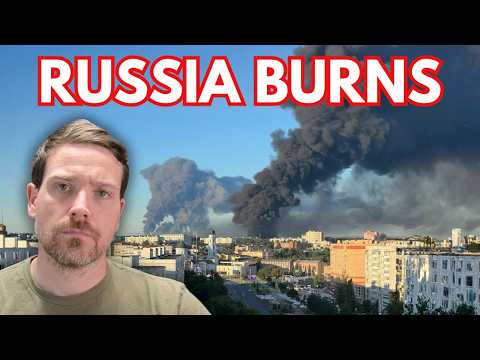
The video opens with a potentially significant military personnel story, reporting that Lieutenant General Charles Costanza was removed as commander of the U.S. Army’s V Corps in Europe and connecting that development to an earlier leadership change involving General Christopher Donahue. Given V Corps’ stated role in American operations in Europe and NATO support, the subject deserves careful examination. Instead, the presentation immediately characterizes the removal as part of the “Trump regime” and implies a Ukraine-related motive without providing an order, official explanation, quoted source or other evidence establishing why Costanza was removed.
That weakness is especially noticeable because the personnel story advertised as the central development quickly disappears. There is no detailed discussion of Costanza’s responsibilities, the circumstances surrounding his departure, who will replace him, whether the change was routine or extraordinary, or what measurable effect it could have on U.S. force posture. The video also says Donahue was previously “pushed out,” but again offers little supporting context. Viewers therefore receive a forceful interpretation of consequential military decisions without enough information to judge the interpretation for themselves.
The strongest portion is the collection of purported battlefield and strike footage. The host moves through clips described as showing Ukrainian drones near ships in the Black Sea, low-altitude operations in the Moscow region, Russian troops firing rifles at drones, damaged logistics facilities, refinery fires and attempts by Russian helicopters and air defenses to intercept incoming weapons. This gives the update an immediacy that conventional studio commentary often lacks, and the host generally explains what viewers are supposed to be looking at. However, crediting online accounts for documenting the material is not the same as establishing when and where every clip was recorded or independently verifying what caused the depicted damage.
The discussion of logistics is more balanced than the opening political framing. While highlighting Ukrainian attacks on Russian logistics hubs, refineries and other targets, the host repeatedly acknowledges that Russia is inflicting severe damage on Ukrainian logistics as well. He also emphasizes Ukraine’s shortage of interceptors rather than presenting the deep-strike footage as evidence that Ukraine is simply dominating the conflict. That recognition of reciprocal vulnerability gives the battlefield section more substance than a straightforward compilation of successful Ukrainian strikes would have.
A major weapons claim requires considerably stronger sourcing. The video says Ukraine is set to receive 70 M39 ATACMS missiles, 12 M270 launchers, thousands of M26 rockets and 47,000 cluster artillery shells from Turkey, then interprets the arrangement through Donald Trump’s relationship with Recep Tayyip Erdoğan. Those are highly specific and consequential assertions, yet the presentation supplies no documents, official statements or other supporting material viewers can evaluate. The subsequent discussion of Erdoğan’s regional ambitions and Trump supposedly not wanting to provide the weapons directly to Volodymyr Zelensky further mixes reported developments with the host’s interpretation of political motives.
The extended Zelensky segment at least makes its attribution much clearer. The video presents Zelensky’s statements about Ukraine rebuilding domestic defense production, Soviet-era air-defense systems having been sold off, North Korean forces and missiles, possible Russian mobilization tactics, retaliatory attacks on logistics and inadequate supplies of anti-ballistic missiles. These remarks are useful for understanding the Ukrainian president’s public position, but they remain Zelensky’s claims and assessments as presented here. Particularly consequential assertions involving North Korean troop numbers, Putin’s intentions and military developments would benefit from independent corroboration rather than being allowed to stand largely on their own.
As a rapid war update, the video has energy, an abundance of visual material and a reasonably clear thread about the growing importance of long-range strikes and logistics. As an explanation of the headline military shake-up, however, it is surprisingly thin. The dramatic framing, loaded political language, uncertain verification of battlefield clips and unsupported causal connections repeatedly make the presentation sound more certain than the evidence shown warrants, while the promotional ending further emphasizes that this is advocacy-driven commentary rather than a carefully documented military analysis.
Pros
- Provides extensive purported battlefield footage that helps illustrate the increasingly important role of long-range drones, logistics targets and air-defense systems.
- Acknowledges that Russian strikes are severely affecting Ukrainian logistics rather than presenting only Ukrainian battlefield successes.
- Clearly attributes the lengthy discussion of air defense, North Korean involvement, mobilization and logistics retaliation to Zelensky.
- Explains the practical importance of interceptors and logistics in accessible terms.
Cons
- Implies that Costanza’s removal is connected to Ukraine without presenting evidence establishing the reason for the personnel decision.
- Gives remarkably little detail about the military leadership change despite making it the headline story.
- Presents highly specific claims about Turkish transfers of ATACMS, M270 launchers, rockets and cluster artillery shells without showing supporting documentation or sourcing.
- Attributes political motives to Trump and Erdoğan with substantially more confidence than the evidence presented supports.
- Battlefield clips are credited to online sources but receive little visible verification of location, timing, provenance or claimed cause of damage.
- Zelensky’s consequential claims about North Korean forces, Russian mobilization and other developments are relayed without meaningful independent corroboration.
- Loaded phrases such as “Trump regime” establish an advocacy posture that weakens the impression of dispassionate military analysis.
There is useful material here about the evolving strike campaign and the logistical pressures facing both Ukraine and Russia, particularly when the video allows the imagery and clearly attributed statements to carry the story. The central U.S. military personnel claim, however, receives far less substantiation than its dramatic framing demands, while several weapons and geopolitical assertions are similarly presented without enough evidence. The result works better as an urgent pro-Ukraine commentary update than as a thoroughly documented explanation of the developments it describes.