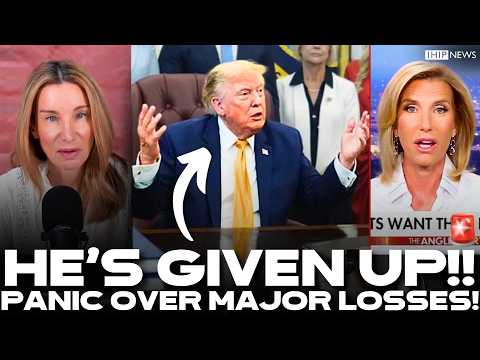
Donald Trump's history of challenging election results forms the foundation of David Pakman's warning about what could happen if Republicans lose control of Congress. Drawing on concerns raised by former Treasury Secretary Robert Rubin and Congressman Joe Morelle, Pakman explores scenarios involving the Insurrection Act, disputed election certifications, and attempts to delay seating newly elected Democratic representatives. His explanation of the House clerk's administrative responsibilities gives an otherwise obscure procedural issue a useful introduction. Importantly, he acknowledges that constitutional limitations would complicate such maneuvers, although the discussion sometimes moves too quickly from identifying potential vulnerabilities to suggesting how Republicans might exploit them. The distinction between a plausible constitutional confrontation and a demonstrated plan to overturn the upcoming election deserves greater emphasis.
The most serious portion concerns new sexual assault allegations against Trump, including an account attributed to former Miss Switzerland Beatrice Kuehl. Pakman describes allegations contained in a report from House Judiciary Committee Democrats, discusses claimed connections to Jeffrey Epstein, and notes the White House's dismissal of the accusations as politically motivated. He also references Trump's previous civil liability for sexually abusing E. Jean Carroll while questioning whether repeated scandals have reduced public attention to new accusations. The discussion appropriately treats the latest accusations as allegations rather than established findings, but it provides limited detail about corroboration, investigative methods, or the differences between the individual accounts. The comparison with how allegations against Barack Obama might be received is rhetorically effective, though hypothetical media reactions cannot establish that Trump's coverage has been unusually limited.
Pakman's examination of Trump's campaign appearances offers a lighter but more openly partisan contrast to those serious subjects. Clips of a heckler confronting Trump about his proposed White House ballroom, Trump's complaints about Obama's Cheesecake Factory comparison, and remarks about Norway and daylight saving time provide material for pointed commentary. Pakman uses these appearances to portray a president preoccupied with personal grievances while more consequential responsibilities remain unresolved. The accompanying footage gives viewers opportunities to hear the remarks themselves, but the analysis frequently substitutes ridicule for deeper examination. Personal insults, speculation about Trump's cognitive condition, and enthusiastic approval of disruptive protesters make the presentation entertaining for sympathetic viewers while weakening its credibility as balanced political commentary.
The discussion becomes more substantive when Trump raises the possibility of offering a $1 million reward for information leading to arrests and convictions involving voter fraud. Pakman identifies legitimate questions about administration, funding, safeguards, and incentives for politically motivated accusations. Unlike the ballroom controversy, this proposal raises concrete questions about how government policy might operate and affect public confidence in elections. However, the commentary does not establish whether a formal program exists, whether the president has the authority or funding to implement it, or how such a reward would differ from existing enforcement mechanisms. Similarly, the segment criticizing JD Vance's explanation of rising gasoline prices makes a reasonable connection between international conflicts and energy markets but does not provide sufficient economic evidence to establish how much responsibility Trump's policies bear for particular price increases.
An interview with Republican Congressman Randy Fine provides one of the more informative examinations of policy and constitutional rights. Fine's proposal to review naturalizations dating back to 1990 prompts questions about whether politicians would apply immigration enforcement standards consistently to opponents and allies, including Melania Trump and Elon Musk. Pakman makes an important distinction between allegations of immigration violations and the legal requirements for revoking citizenship, explaining that denaturalization requires an established process rather than a politician's personal preference. He also recognizes that questioning the standards used to award an immigration visa is not itself proof of fraudulent paperwork. Although his discussion of Melania's and Musk's immigration histories includes assertions that would benefit from more precise documentation, the broader examination of equal treatment and citizenship security is considerably more measured than the campaign-rally commentary.
The later political analysis attempts to explain the Republican Party's changing relationship with authoritarian leaders and extremist movements. Pakman contrasts the party's traditional anti-Soviet rhetoric with Trump's favorable remarks about certain foreign strongmen and controversies involving figures such as Nick Fuentes and Tucker Carlson. He usefully acknowledges that American conservatism has included authoritarian tendencies historically and that not all Republicans support extremist viewpoints. Nevertheless, his explanation relies heavily on broad claims about political motivations, cruelty, and loyalty to power without demonstrating how representative these attitudes are across Republican voters and officials. His final examination of a possible Republican congressional defeat similarly raises meaningful questions about investigations, executive authority, and the 2028 presidential race, but increasingly speculative predictions about internal party conflict, retaliation, and future election challenges overwhelm the available evidence.
As a political commentary program, the presentation benefits from Pakman's energetic delivery, recognizable public figures, and frequent use of recorded statements to anchor discussion. The strongest sections explain institutional procedures and legal distinctions that viewers might otherwise overlook, while the weaker sections rely on repetition, sarcastic characterizations, and assumptions about future behavior. Multiple promotions for an election guide, paid membership, newsletter subscriptions, and commercial sponsors also interrupt the flow, particularly when transitioning between serious allegations and campaign entertainment. Despite the breadth of material, the recurring focus on Trump's personal grievances and anticipated responses to electoral defeat makes portions of the program feel more repetitive than illuminating.
Pros
- The examination of possible disputes over congressional election certification introduces an important constitutional issue and acknowledges meaningful legal obstacles.
- The discussion of sexual assault allegations distinguishes the new accusations from Trump's established civil liability and includes the White House's response.
- Recorded campaign appearances and interview excerpts allow viewers to hear important remarks directly rather than relying entirely on the host's descriptions.
- The examination of Trump's proposed voter-fraud reward identifies practical questions about oversight, financing, enforcement, and potential abuse.
- The Randy Fine interview provides a useful opportunity to explain denaturalization, immigration enforcement, and the legal protections afforded to naturalized citizens.
- The discussion of authoritarian influences within Republican politics includes historical context and recognizes that extremist positions are not universally shared.
- Pakman's clear delivery and conversational approach make complicated political and legal subjects accessible to a general audience.
Cons
- Several warnings about election interference and future presidential actions rely on hypothetical scenarios without enough supporting evidence to establish their likelihood.
- The discussion of serious sexual assault allegations offers limited information about corroboration, investigative findings, and differences between the individual claims.
- Frequent insults, mocking commentary, and speculative characterizations of political figures undermine the presentation's analytical credibility.
- Claims about gasoline prices, immigration histories, campaign effectiveness, and the broader Republican electorate would benefit from more detailed sourcing and measurable evidence.
- The treatment of Republican authoritarianism sometimes generalizes from prominent individuals and controversies to a much larger political movement.
- Repeated predictions about Trump's reaction to electoral defeat and recurring commentary about the White House ballroom create unnecessary overlap.
- Advertising breaks, membership promotions, and repeated election-guide announcements disrupt the pacing of an already wide-ranging program.
David Pakman delivers an energetic and occasionally informative examination of election procedures, allegations against Trump, immigration policy, and the political consequences of a possible Republican congressional defeat. His strongest analysis emerges when he explains specific legal mechanisms and uses public statements to raise concrete questions, while his weaker material relies on partisan ridicule, insufficiently supported generalizations, and increasingly speculative forecasts. The result is accessible political commentary with several worthwhile discussions, but its persuasive priorities and uneven evidentiary standards limit its value as a balanced assessment of the issues.