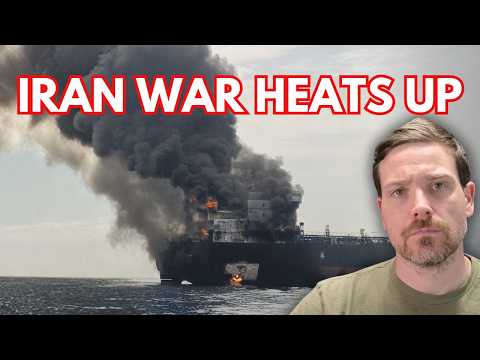
A warning about dwindling American missile defense interceptors becomes the starting point for a sweeping criticism of Donald Trump's military leadership and foreign policy decisions. The host highlights former Army Chief of Staff General Randy George's reported concerns about Patriot and THAAD interceptor shortages potentially lasting until 2030, arguing that the administration ignored foreseeable dangers before entering the conflict with Iran. From there, the discussion expands into military leadership changes, alleged misconduct, regional instability, and controversial decisions affecting Ukraine. The presentation is urgent and confrontational, combining statements from retired military officers with the host's unmistakably partisan interpretation of events.
One of the more substantive segments examines an open letter reportedly signed by 72 retired generals, admirals, and other senior military officials opposing plans to livestream the execution of Nidal Hasan. The host explains their concerns about constitutional protections, military dignity, and the possibility that broadcasting an execution could transform a convicted mass killer into a martyr. His personal opposition to capital punishment adds context without minimizing Hasan's crimes. This section works particularly well because it identifies specific objections from military professionals and connects them to broader questions about the responsibilities and ethical standards of military institutions. However, the discussion occasionally shifts from the letter's arguments into inflammatory characterizations of administration officials.
The allegations surrounding civilian deaths in Iran introduce an even more serious dimension. The host accuses the administration of concealing a completed Pentagon investigation into deadly attacks on an elementary school in Minab and a sports facility in Lamerd, describing Tomahawk missiles and tungsten-based weapons as responsible. These are grave accusations that demand careful evidentiary treatment, particularly when identifying responsibility for alleged war crimes. Although the host refers to leaked information and a supposedly completed investigation, the presentation offers insufficient independently examinable documentation to establish its strongest conclusions. His prediction that the administration will withhold the findings until after the midterm elections is also speculative, despite being delivered with considerable certainty.
Retired Lieutenant General Mark Hertling's interview provides some of the most informative military analysis. Discussing the Houthis, Saudi Arabia, the Red Sea, and the Bab el-Mandeb Strait, Hertling outlines how an expanding regional conflict could disrupt shipping, threaten energy supplies, and draw American forces into additional confrontations. His discussion of Saudi military capabilities and the country's prolonged difficulties confronting the Houthis adds strategic context beyond the host's political commentary. Hertling also addresses reported disruptions to Ukrainian battlefield communications, explaining how losing satellite-supported command systems could compromise drone operations and situational awareness. His technical explanation is valuable, but suggestions that Trump or Elon Musk deliberately caused the disruption remain unproven within the presentation.
The criticism intensifies when the host challenges CENTCOM Commander Admiral Brad Cooper's statements about shipping through the Strait of Hormuz. Cooper's recorded remarks cite approximately 400 merchant vessels and more than 100 million barrels of crude oil moving through the strait over seven days, figures the host disputes by pointing to reported tanker attacks and continuing instability. Presenting Cooper's actual remarks allows viewers to hear the official position directly, but the rebuttal relies heavily on ridicule rather than a detailed examination of shipping records or competing figures. A similar weakness appears in the discussion of sanctions waivers involving Russia, where the host quotes Senator Richard Blumenthal's condemnation and references praise from a Russian official without fully exploring the administration's stated justification.
The overall presentation is energetic and frequently supported by relevant interview excerpts, military statements, and references to official actions. Nevertheless, its effectiveness suffers from repeated personal insults, sweeping accusations, and abrupt shifts between subjects. The lengthy attacks on Trump's character distract from the military issues that initially give the discussion its importance, while the Jolie showerhead advertisement interrupts the momentum of Hertling's analysis. The closing promotion for the host's book, WTF America, further reinforces the commentary-driven nature of the production. Viewers who share the host's political outlook may appreciate the passion, but those seeking a disciplined assessment of military policy will find that legitimate questions are too often overshadowed by rhetoric.
Pros
- Highlights specific concerns about Patriot and THAAD interceptor shortages, military leadership changes, and the possible consequences of expanded military operations.
- Examines the objections of 72 retired senior military officers to a proposed public execution, including constitutional, ethical, and national security concerns.
- Incorporates substantive commentary from retired Lieutenant General Mark Hertling about regional instability, Saudi Arabia, the Houthis, and threats to international shipping.
- Explains the battlefield importance of satellite-supported communications and the potential consequences of disruptions to Ukrainian military operations.
- Includes recorded statements from military officials and political figures, giving viewers opportunities to hear important portions of their positions directly.
- Connects military decision-making with broader concerns about accountability, civilian casualties, international relationships, and congressional oversight.
Cons
- Presents serious allegations about war crimes, concealed investigations, discriminatory personnel decisions, and intentional communications disruptions without consistently providing sufficient supporting evidence.
- Frequently treats political interpretations and suspicions as established conclusions, weakening the distinction between documented developments and speculation.
- Relies heavily on personal insults and emotionally charged descriptions that distract from substantive military and geopolitical analysis.
- Disputes Admiral Cooper's shipping figures without presenting a sufficiently detailed factual comparison or alternative accounting.
- Gives limited consideration to competing explanations or official justifications for controversial administration decisions.
- Commercial interruptions, repeated political denunciations, and the extended book promotion disrupt the pacing and diminish the focus on military leadership warnings.
This forceful political commentary raises important questions about military preparedness, strategic decision-making, and accountability while benefiting from several substantial contributions by experienced military officers. Its strongest material encourages scrutiny of consequential defense policies, but excessive rhetoric and insufficient support for serious allegations undermine its credibility as a balanced examination. Ultimately, it is more effective as an impassioned argument against the administration than as a carefully documented assessment of the military controversies it discusses.