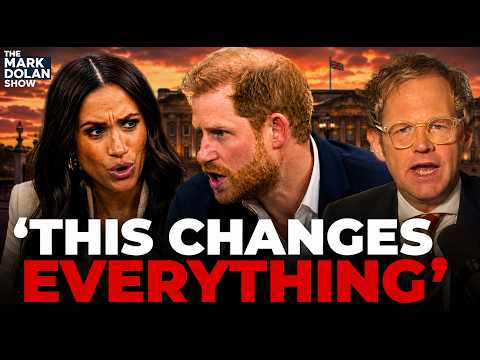
King Charles’s reported guidance to government, military and royal representatives provides a concrete basis for discussing the Sussexes’ position: Harry and Meghan are described as private individuals rather than working royals, their HRH styles remain unused, and questions involving public funds or royal protocol are to be referred to Buckingham Palace. Those points give the discussion a clearer factual foundation than royal commentary built entirely on anonymous palace gossip. The hosts are also right to recognize that restating the post-2020 arrangement matters if outside organizations could otherwise misunderstand the couple’s official status.
The presentation becomes less reliable when it turns that administrative clarification into a sweeping personal victory for Prince William and a deliberate humiliation of Harry and Meghan. Claims that the King is trying to embarrass the couple into private life, that William has “won,” or that the wording is intended as a “dagger to the heart” are interpretations rather than demonstrated conclusions. The letter as presented establishes boundaries, but the hosts repeatedly assign motives and emotional consequences that the document itself does not prove.
There is nevertheless useful attention paid to some of the letter’s practical distinctions. The discussion explains that charitable and commercial activities remain separate from official royal duties, that operational security questions are directed toward police authorities, and that administrative matters concerning the Sussexes should go to their own office. Those details help clarify what “private capacity” could mean in practice, particularly when organizations are deciding whether a Sussex appearance carries any official connection to the Crown.
That potentially informative analysis is weakened by the relentlessly adversarial tone. Harry and Meghan are accused of dishonesty, hypocrisy, attempting to establish a “rival royal court,” exploiting their titles, and manipulating institutions, often without evidence being presented beyond the hosts’ interpretation of their behavior. Brittany also argues for removing titles, succession rights and the Councillor of State role, but the legal, constitutional or procedural requirements for doing so are never examined. As a result, strong opinions regularly substitute for the deeper institutional analysis the subject deserves.
The later security discussion is even more speculative. Reporting about concerns surrounding school runs is treated as evidence that Harry and Meghan may be intentionally creating or inviting a dangerous situation in order to strengthen their case for publicly funded protection. That is a serious accusation, yet no evidence is offered establishing such an intention. The hosts can reasonably question whether publicly discussing security routines is wise, but suggesting that the couple wants an incident to occur moves far beyond what the material presented can support.
Structurally, the segment would also benefit from greater discipline. Reading substantial portions of the reported guidance gives viewers useful primary material to evaluate, but repeated declarations of victory, humiliation and hypocrisy make the same point many times. The Medicare advertisement abruptly interrupts the letter itself, while the closing discussion of Meghan, the Beckhams and subscription promotion pulls attention away from the central issue. There is a worthwhile story here about formal royal status and institutional boundaries, but the commentary too often turns a relatively straightforward clarification into evidence for a much broader narrative it has not established.
Pros
- Reads and discusses substantial portions of the reported royal guidance rather than relying solely on vague secondhand claims.
- Clearly explains the distinction between private Sussex activities and official duties performed on behalf of the monarchy.
- Highlights useful practical details concerning public funds, Buckingham Palace referrals, security authorities and the couple’s separate office.
Cons
- Repeatedly presents interpretations of the King’s motives and Harry and Meghan’s reactions as though they were established by the letter.
- Serious accusations about dishonesty, manipulation and deliberately creating security pressure are asserted without demonstrated evidence.
- Calls for stripping titles, succession status and other roles are not accompanied by meaningful legal or constitutional analysis.
- Personal ridicule, repetitive declarations of “humiliation” and unrelated tangents reduce the credibility and focus of the discussion.
- The advertisement inserted during the reading of the letter disrupts one of the segment’s most important evidentiary portions.
A formal clarification of Harry and Meghan’s private status is substantial enough to support an informative discussion about royal representation, public resources and institutional boundaries. Unfortunately, the hosts repeatedly stretch that material into claims about motives, personal humiliation and security manipulation that are far less well supported. The underlying reporting is useful, but the commentary would be considerably stronger with more restraint and clearer separation between documented guidance and speculation.