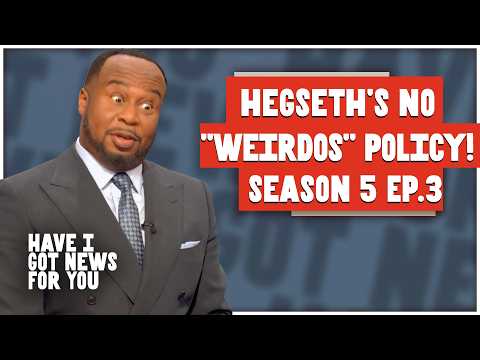
With the 2026 midterm elections approaching, a group of current and former national security officials is reportedly preparing lawmakers for potential interference by the Trump administration. The possibility of federal agents appearing near polling stations, voting equipment being seized, or election results being challenged through allegations of foreign interference forms the foundation of an urgent political commentary. Drawing on reporting from The Washington Post, The Atlantic, Axios, and other outlets, the presentation examines concerns about executive overreach while questioning whether America's legal institutions could effectively respond to a president who refuses to accept judicial restrictions.
The most substantial reporting concerns private discussions between national security officials and lawmakers about possible election-related contingencies. According to the Washington Post account presented, these conversations involve identifying ways federal authority could be used to influence voting, encouraging lawmakers to oppose improper interference, and helping state governments strengthen election procedures. The distinction between preparing for hypothetical threats and establishing that those threats will occur is especially important. Although the commentator acknowledges that nobody knows what will happen, his repeated characterization of interference as likely sometimes gives potential scenarios a greater sense of inevitability than the available evidence supports.
A particularly effective section features national security reporter David Rohde discussing how an administration might exploit intelligence claims to challenge election results. His hypothetical example involves allegations that Chinese hackers compromised voting machines in Des Moines, Iowa, potentially providing a justification for federal intervention in competitive races. Rohde also raises concerns about immigration enforcement operations near polling locations and describes legal organizations preparing emergency court filings. These examples give the broader discussion practical substance, illustrating how disputes over election administration could develop into confrontations involving federal agencies, state officials, and the judiciary. Importantly, they remain scenarios rather than documented plans to carry out election interference.
The constitutional questions surrounding judicial authority provide another worthwhile dimension. The commentator argues that federal courts could issue orders against unlawful presidential actions but might struggle to secure compliance if the executive branch resisted. This concern raises legitimate questions about institutional accountability and the importance of officials respecting legal boundaries. However, the explanation becomes overly simplistic when it suggests that the president effectively holds all the power because judges and advocacy organizations lack independent military forces. Constitutional enforcement involves more than a comparison of armed resources, and the discussion would benefit from a fuller examination of legal mechanisms, institutional responsibilities, and the limits of presidential authority.
Public opinion polling adds another perspective, with the commentator citing a Washington Post, ABC News, and Ipsos survey indicating that 70% of Americans lack confidence that Trump will accept the midterm results. He also references a Public Religion Research Institute survey conducted with the Brookings Institution reporting that 58% of Americans agree with a strongly critical characterization of Trump's political authority. These figures help illustrate the extent of public concern described in the commentary, but polling measures attitudes rather than establishing what the administration intends to do. The presentation largely treats the numbers as confirmation of its warnings without exploring differences between public expectations, political perceptions, and evidence of specific future actions.
The delivery is passionate, confrontational, and unmistakably partisan. The commentator communicates his frustration through direct language, repeated warnings, and comparisons intended to make institutional dangers feel immediate. His Grand Theft Auto analogy, which compares Trump's alleged incentives to continue breaking laws with a player already facing the game's maximum police pursuit level, offers a memorable explanation of his argument about political self-preservation. Yet the comparison rests on assumptions about Trump's motivations and legal exposure that are not independently demonstrated. Frequent insults, sweeping accusations against Trump voters, and repeated predictions of an approaching catastrophe also weaken the analytical presentation by allowing emotional condemnation to overshadow more carefully supported concerns.
Despite its increasingly heated conclusion, the commentary succeeds in directing attention toward an important question: how prepared are democratic institutions to respond if federal officials attempt to interfere with an election? The reported contingency planning, detailed interference scenarios, and discussion of coordinated legal responses provide meaningful material for viewers interested in election integrity. Nevertheless, the presentation is more effective as an expression of political alarm than as a balanced assessment of the likelihood of different outcomes. Its strongest reporting deserves a more disciplined treatment that consistently separates confirmed preparations, attributed allegations, hypothetical possibilities, and personal predictions.
Pros
- Reporting about current and former national security officials privately preparing lawmakers for possible election interference gives the discussion a concrete and consequential foundation.
- David Rohde's hypothetical scenarios involving foreign hacking allegations, voting-machine seizures, and immigration enforcement near polling places make potential institutional conflicts easier to understand.
- The discussion of emergency legal preparations by voting rights organizations introduces a useful counterbalance to the emphasis on possible executive misconduct.
- Questions about judicial enforcement and presidential compliance highlight important constitutional vulnerabilities worthy of public examination.
- Public opinion polling provides additional context about Americans' reported concerns over whether election results will be accepted.
- The energetic delivery and accessible Grand Theft Auto comparison make complicated political arguments engaging for viewers who appreciate strongly opinionated commentary.
Cons
- Hypothetical interference scenarios are repeatedly framed as probable outcomes without sufficient evidence establishing that they will occur.
- The discussion of judicial enforcement oversimplifies constitutional checks and balances by emphasizing the president's control of federal enforcement resources.
- Strongly partisan language, personal insults, and condemnation of Trump voters undermine the credibility of an otherwise serious examination of election security.
- Polling results are used primarily to reinforce the commentator's conclusions rather than being examined with appropriate distinctions between public perceptions and demonstrated threats.
- Assertions about Trump's criminal liability, motivations, and willingness to disregard court orders receive insufficient evidentiary support.
- Repeated predictions of an impending constitutional catastrophe create unnecessary sensationalism and crowd out more detailed discussion of practical safeguards.
The commentary raises consequential questions about election integrity, executive authority, and the ability of American institutions to withstand potential political interference. Its strongest moments combine reported contingency planning with specific examples of how election disputes might escalate, but its credibility suffers when hypothetical threats become near-certain predictions and partisan outrage replaces careful analysis. As an urgent expression of political concern, it is engaging and sometimes informative, although a more measured approach would make its warnings considerably more persuasive.