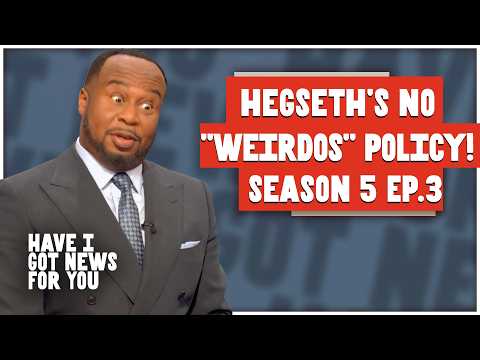
Donald Trump's declaration that America is experiencing a golden age provides a striking contrast to the international instability and economic pressures highlighted throughout this political commentary. Speaking with reporters after an appearance in Montana, Trump insists that the war with Iran will end whenever he decides and predicts that oil prices will fall dramatically. The host challenges those assurances by pointing to continued military tensions, rising energy costs, and uncertainty surrounding American foreign policy. The opening establishes a legitimate question about whether the administration's optimistic messaging reflects the conditions described, although the commentary quickly adopts a confrontational tone that leaves little room for alternative interpretations.
The discussion of Iran represents the most consequential portion of the presentation. The host cites reports that the United States military has been directed to develop additional strike options against Iranian targets, potentially including energy infrastructure and the use of powerful conventional weapons. Statements attributed to Israeli Prime Minister Benjamin Netanyahu and Iranian officials reinforce the possibility of further escalation. These developments create a troubling contrast with Trump's predictions of an imminent conclusion to the conflict. However, the host goes considerably further by suggesting that Trump and Netanyahu may be seeking a national security crisis to influence upcoming elections. That interpretation is presented with considerable confidence despite the absence of direct evidence establishing such intentions.
Ukraine provides another important dimension to the criticism. The host highlights Trump's failure to answer a reporter's question about intelligence sharing and alleges that restrictions involving Starlink and Starshield are interfering with Ukrainian military operations. He also describes continued Russian attacks against Ukrainian infrastructure and Ukraine's determination to strike Russian energy facilities in response. These subjects raise meaningful questions about American strategic commitments and the consequences of military assistance decisions. Unfortunately, the discussion provides little documentation establishing the specific restrictions alleged, their operational effects, or the administration's reasoning. Trump's departure without answering a question is worth examining, but treating that moment as definitive evidence of weakness substitutes personal judgment for substantive analysis.
Economic concerns give the commentary a more tangible connection to everyday American life. The host references a reported consumer inflation rate of 3.7%, substantial increases in fuel and gasoline prices, higher airline fares, and rising costs involving utilities, healthcare, and vehicle repairs. He also criticizes Treasury Secretary Scott Bessent's handling of financial markets while highlighting mocking statements attributed to Iranian parliamentary leader Mohammad Bagher Ghalibaf. The numerical examples help explain why international conflict and economic policy matter beyond political rhetoric. Nevertheless, the figures receive insufficient sourcing and context, particularly regarding their measurement periods and the degree to which individual price increases can reasonably be attributed to the Iran conflict. Predictions that inflation will approach 4% are similarly speculative rather than established outcomes.
The commentary then shifts toward controversies involving Trump's associates and administration personnel. Floyd Mayweather's presence aboard the presidential aircraft becomes an opportunity to question Trump's priorities, with the host citing reported financial and personal controversies involving the former boxer. More substantively, the discussion examines claims that newly appointed press secretary Katie Zacharia presented herself as a practicing attorney despite reportedly failing the California bar examination. Clips of her describing her legal background give viewers a concrete basis for understanding the concern, while the reference to Wall Street Journal reporting provides a potentially useful evidentiary foundation. Still, failing one bar examination does not independently establish that someone never obtained legal authorization elsewhere, and the presentation does not fully resolve that distinction before suggesting serious professional misrepresentation.
Legal disputes surrounding the Kennedy Center introduce another example of the host's broader argument about accountability. He discusses a declaration invoking presidential communications privilege to resist certain discovery requests in ongoing litigation, connecting that development to Trump's public claims about the institution's financial condition and renovation needs. The inclusion of language from the declaration makes this section more specific than several of the surrounding accusations. However, the commentary treats the invocation of executive privilege largely as proof that Trump wants to conceal unfavorable information, without examining the legal arguments or limitations surrounding that privilege. A brief comparison with Trump's reported resistance to a deposition in litigation against the BBC reinforces the host's narrative but receives similarly limited legal examination.
The final political comparison involves Texas Attorney General Ken Paxton and James Talarico, with the host praising Talarico's willingness to participate in an adversarial CNN/Jubilee discussion while criticizing Paxton for allegedly avoiding debate. This example fits the recurring theme of political figures making forceful public claims while resisting direct scrutiny, but it also illustrates the presentation's tendency to move rapidly between loosely connected controversies. Repeated descriptions of Trump and his allies as weak, dishonest, or pathetic diminish the impact of otherwise legitimate questions about military escalation, economic performance, professional credentials, and government transparency. The energetic delivery maintains urgency, yet the relentless partisan framing, frequent speculation, and concluding book promotion make the presentation more effective at reinforcing an existing political viewpoint than informing an undecided audience.
Pros
- Includes Trump's direct remarks about the Iran conflict, allowing viewers to evaluate his confident predictions against the concerns raised by the host.
- Addresses consequential international developments involving Iran, Israel, Russia, and Ukraine, connecting military decisions to broader questions about American foreign policy.
- Uses specific inflation figures and consumer price categories to illustrate the potential economic consequences of geopolitical instability.
- Incorporates reported statements from Iranian and Israeli officials, providing useful examples of the competing rhetoric surrounding possible military escalation.
- Highlights questions about professional credentials and government vetting through clips of Katie Zacharia discussing her legal background.
- References an actual legal declaration concerning presidential communications privilege, giving the Kennedy Center discussion a concrete documentary element.
Cons
- Relies heavily on partisan insults and personal ridicule, undermining the credibility of serious criticism concerning national security and government accountability.
- Speculates that Trump and Netanyahu may deliberately seek military escalation to influence elections without presenting sufficient evidence of their intentions.
- Provides inadequate sourcing and context for several consequential claims involving Ukrainian military communications, inflation, financial markets, and American troop deployments.
- Frequently presents political interpretations as established conclusions, particularly when discussing Trump's motivations, legal disputes, and alleged dishonesty.
- Does not sufficiently distinguish failing a particular bar examination from never obtaining authorization to practice law, leaving an important aspect of the allegations against Zacharia unresolved.
- Moves between numerous controversies without consistently developing their relevance, weakening the central argument and limiting opportunities for balanced examination.
This commentary raises legitimate concerns about the administration's handling of international conflict, economic pressures, personnel qualifications, and legal accountability, supported by several useful clips and specific examples. Its strongest material comes from direct statements and documented disputes, but unsupported speculation, aggressive personal attacks, and limited consideration of competing explanations substantially weaken its analytical credibility. The result is an energetic and occasionally informative political critique that succeeds at communicating opposition to Trump's leadership but falls short of delivering a consistently rigorous, balanced assessment.