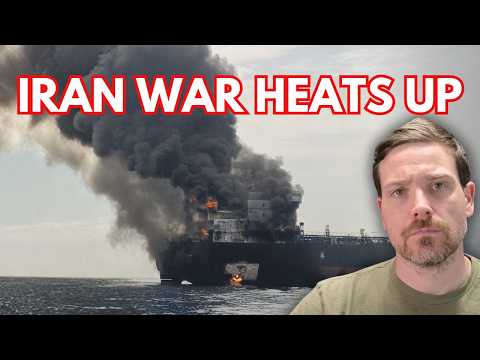
Repeated missile and drone attacks on Riyadh's King Khalid International Airport have raised serious questions about Saudi Arabia's ability to defend its most important infrastructure against the Houthis. The presenters describe a rapidly escalating confrontation involving civilian casualties, damaged airport terminals, attacks on energy facilities, and dwindling air defense supplies. Their central argument is that relatively inexpensive weapons have dramatically altered the balance between wealthy military powers and less conventional opponents. It is a compelling starting point for examining modern warfare, although the discussion frequently moves from reported developments into sweeping political conclusions.
The account of the airport attacks provides some of the presentation's most substantial material. According to the hosts, the strikes killed at least 13 people, injured hundreds, damaged multiple terminals, and forced the airport to close temporarily. They also describe repeated attacks over several days, including a fire in Terminal Four, while explaining how the Houthis allegedly combined drones with cruise and ballistic missiles to overwhelm Saudi defenses. The discussion of maneuverable missile warheads, limited interceptor inventories, and dangerous interception debris helps explain why expensive defensive systems cannot guarantee protection. However, the casualty figures, operational details, and claims about Saudi air defense failures are presented without enough independently identifiable sourcing to establish their accuracy.
The presenters place considerable emphasis on Saudi Arabia's responsibility for restarting hostilities, alleging that Saudi forces violated an earlier ceasefire by attacking an aircraft returning from Iran. They connect subsequent Houthi operations to Saudi strikes in Yemen, including reported civilian deaths in Al-Jawf and attacks on fuel infrastructure. This historical framing gives the escalation a recognizable sequence of actions and retaliations rather than treating the airport strikes as isolated events. Nevertheless, the account overwhelmingly adopts the Houthis' explanation of the conflict, offering limited consideration of Saudi security concerns, competing interpretations of the ceasefire, or the broader consequences of Houthi attacks on civilian infrastructure.
One of the more interesting arguments concerns whether drones and missiles could eventually discourage wars by allowing weaker forces to impose meaningful costs on stronger adversaries. The hosts suggest that countries accustomed to conducting attacks with relatively little direct retaliation may become more cautious when their own airports, cities, and economic facilities are vulnerable. This raises a worthwhile question about deterrence and the changing economics of warfare. Yet the suggestion that greater destructive capability will ultimately produce fewer conflicts remains speculative. The discussion pays insufficient attention to the possibility that easier access to long-range weapons could instead encourage repeated retaliation, civilian targeting, and prolonged instability.
The economic consequences receive useful attention through the reported attacks on Saudi Aramco facilities, refinery operations, and wider regional shipping routes. The presenters describe damage to an Aramco administrative building, including offices associated with oil supply planning, and connect disruptions in refining capacity to potential shortages of diesel and rising energy costs. References to crude oil prices exceeding $100 per barrel and declining participation in a Saudi petroleum conference help illustrate why the conflict matters beyond the battlefield. Still, the discussion sometimes treats projected economic damage as inevitable without adequately distinguishing immediate disruptions from longer-term market consequences. It also moves between Houthi attacks, Iranian operations, and the Russia-Ukraine war without consistently establishing their separate contributions to energy-market pressures.
The examination of Houthi territorial advances adds another dimension to the military analysis. Footage and commentary attributed to Ryan Grim describe developments around Taiz, including the Houthis' reported control of western approaches and their broader influence over territory containing much of Yemen's population. The presenters also acknowledge uncertainty surrounding footage of a vehicle being destroyed, noting disagreement over whether a mine or mortar fire caused the explosion. That admission of uncertainty is welcome, but it contrasts with other confident predictions, including the suggestion that Houthi forces could advance into Saudi territory and threaten Mohammed bin Salman's political position. Such scenarios require more military evidence than the presentation supplies.
The greatest weakness is the increasingly confrontational political commentary. Criticism of Saudi military operations, American foreign policy, and Israeli actions is a legitimate part of examining the regional conflict, particularly when discussing civilian suffering and international law. However, the hosts repeatedly make sweeping allegations about Israeli influence, American political institutions, and the motivations behind the broader Middle Eastern war without presenting sufficient supporting evidence or examining alternative explanations. Personal insults, exaggerated declarations about Saudi military incompetence, and occasional celebratory language surrounding attacks further undermine the seriousness of an otherwise important subject. The conversational exchange maintains energy and urgency, but its partisan certainty often replaces the measured scrutiny that complex geopolitical developments demand.
Pros
- Detailed discussion of repeated attacks on King Khalid International Airport provides a concrete focus for examining the escalation.
- Clear explanations of drone warfare, maneuverable ballistic missiles, interceptor shortages, and air defense limitations make complex military issues accessible.
- Historical context concerning Saudi operations in Yemen and the reported ceasefire breakdown helps explain the presenters' interpretation of the renewed fighting.
- The argument about weaker military forces gaining retaliatory capabilities raises an interesting question about deterrence and future conflicts.
- Coverage of attacks on Saudi Aramco facilities, refinery vulnerabilities, and potential diesel shortages connects battlefield developments to wider economic concerns.
- Discussion of territorial changes around Taiz expands the analysis beyond missile strikes and acknowledges the Houthis' substantial presence within Yemen.
Cons
- Major claims about casualties, military capabilities, ceasefire violations, and political developments lack sufficient independently verifiable sourcing.
- The consistently anti-Saudi and anti-Israeli framing leaves little room for competing explanations or a balanced examination of regional security concerns.
- Predictions about Houthi advances into Saudi Arabia, Mohammed bin Salman's political future, and the possibility of fewer wars are insufficiently supported.
- Broad allegations about Israeli influence over American politics and responsibility for regional instability are delivered with more certainty than the evidence presented warrants.
- Personal insults, inflammatory language, and occasional mockery of military setbacks detract from the gravity of civilian casualties and escalating warfare.
- The presentation sometimes blurs the distinction between reported events, military interpretation, political opinion, and speculative economic consequences.
The presenters deliver an energetic examination of Houthi attacks on Saudi Arabia, highlighting the growing significance of drones, missile defenses, infrastructure vulnerabilities, and regional economic disruption. Their military and economic observations raise worthwhile questions, but selective framing, insufficient sourcing, and highly charged political commentary weaken the overall credibility of the analysis. It is an engaging introduction to the dangers of asymmetric warfare, though viewers seeking a dependable understanding of the conflict will need more carefully verified reporting and competing perspectives.