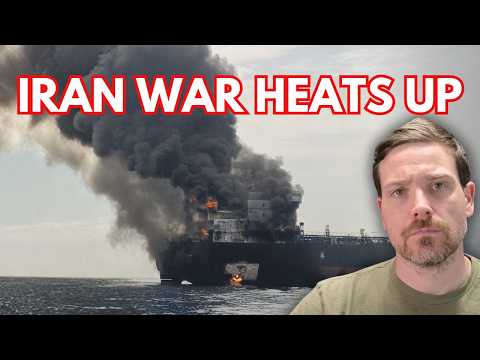
Iran's hostility toward Benjamin Netanyahu takes center stage as Amir Tsarfati and Pastor Barry Stagner examine the approaching October 27 Israeli parliamentary election. Speaking from Jerusalem with the Old City visible behind him, Tsarfati argues that Iran and its regional allies have powerful reasons to prevent Netanyahu from remaining prime minister. The discussion connects those concerns to recent military developments, domestic political controversies, and a broader struggle over Israel's future. Although the presentation offers an engaging perspective on how regional tensions could influence the election, its strongly partisan interpretation frequently moves beyond what the evidence presented can establish.
Tsarfati provides useful background on Israel's parliamentary system, explaining how political parties compete for representation in the 120-seat Knesset and why assembling a 61-seat majority is essential to forming a government. He then argues that Iran's Islamic Revolutionary Guard Corps and allied organizations have a direct interest in Netanyahu's defeat, particularly following the Israeli operation that he says killed Iran's supreme leader in February 2026. His suggestions that Iranian-backed groups might attempt assassinations, drone attacks, or coordinated disruptions before election day create a sense of urgency. However, the discussion offers little independently verifiable evidence of specific planned operations, making these scenarios assessments of possible threats rather than established intelligence findings.
The examination of Saudi Arabia broadens the geopolitical discussion considerably. Tsarfati describes alleged Houthi attacks against Saudi airports, oil facilities, and civilian infrastructure, including reported casualties at King Khalid International Airport. He argues that Saudi Arabia's reluctance to normalize relations with Israel has weakened its strategic position and that joining the Abraham Accords would provide a more productive regional partnership. This interpretation raises worthwhile questions about diplomatic alignment and collective security, but the presentation treats Saudi decisions as unnecessarily straightforward. Claims about military vulnerabilities, casualty figures, and the effectiveness of existing defense partnerships receive limited substantiation, while competing Saudi security and diplomatic considerations receive little attention.
Netanyahu's domestic political struggles form another substantial part of the conversation. Tsarfati argues that recent courtroom developments, comments from a former Biden administration official involved in hostage negotiations, and revelations concerning an alleged Egyptian intelligence warning have undermined major accusations against the prime minister. The included interview excerpt concerning hostage negotiations is particularly valuable because it allows viewers to hear relevant remarks directly rather than relying entirely on the hosts' characterization. Nevertheless, the conclusion that Netanyahu has been comprehensively vindicated is considerably broader than the material establishes. The discussion also portrays political opponents and legal institutions as participants in a coordinated campaign against him without sufficiently examining alternative interpretations or distinguishing disputed allegations from demonstrated misconduct.
The conversation becomes less disciplined when it shifts toward information warfare, American politics, and cultural conflict. Tsarfati claims that an attack on a Russian data center dramatically reduced online engagement with pro-Palestinian messaging and certain American commentators, presenting these alleged changes as evidence of coordinated manipulation. Yet the striking numerical claims are not accompanied by a transparent methodology, reliable audience measurements, or evidence establishing causation. The hosts also connect Soviet-era propaganda techniques to contemporary political movements, presenting an expansive theory of ideological subversion that leaves little room for independent political disagreement. Additional discussions involving NATO, a reported Russian disease outbreak, religious freedom, and allegations against American political figures further expand the scope, but several serious accusations are repeated without adequate supporting documentation or meaningful qualification.
Biblical prophecy provides the framework connecting these otherwise disparate subjects. Stagner and Tsarfati repeatedly interpret contemporary conflicts through Ezekiel, Revelation, and New Testament teachings about the end times, linking regional alliances, social unrest, disease fears, and government authority to anticipated prophetic events. This approach gives the program a consistent identity for viewers who share its religious perspective, and the conversational exchange between Jerusalem and California generally remains natural and accessible. However, theological interpretation is frequently presented alongside geopolitical analysis without clearly separating faith-based predictions from independently demonstrable developments. Repeated appeals to subscribe, share the program, participate in elections, and purchase Tsarfati's book also interrupt the reporting and reinforce the presentation's advocacy-oriented purpose.
Pros
- Clearly explains the basic mechanics of Israel's parliamentary elections and the importance of coalition-building in determining the next government.
- Connects Netanyahu's political position to tensions involving Iran, Hezbollah, Hamas, and other regional actors, providing a coherent account of the hosts' strategic concerns.
- Includes a relevant interview excerpt about hostage negotiations, allowing viewers to hear firsthand commentary on a major political controversy.
- Explores Saudi Arabia's security challenges and normalization choices within the wider context of Middle Eastern diplomacy.
- Maintains a recognizable religious and geopolitical perspective, with an engaging conversational format and the Jerusalem backdrop adding immediacy.
- Encourages political participation and highlights the potential significance of foreign interference in democratic elections.
Cons
- Treats speculative threats of Iranian election interference and possible attacks as highly probable without presenting sufficiently specific corroborating evidence.
- Makes sweeping claims about Netanyahu's legal and political vindication that exceed what the selected testimony and reported developments establish.
- Presents dramatic allegations about Russian bot networks, audience manipulation, and coordinated propaganda without transparent sourcing or reliable supporting data.
- Frequently characterizes political opponents and entire ideological movements in hostile terms, limiting balanced examination of competing perspectives.
- Blends biblical prophecy with geopolitical forecasting without consistently distinguishing religious interpretation from factual analysis.
- Numerous tangents into American domestic politics, public health fears, and cultural controversies dilute the central election discussion, while promotional interruptions weaken the pacing.
Amir Tsarfati and Barry Stagner deliver an energetic, conviction-driven discussion that offers useful insight into how pro-Netanyahu religious commentators interpret Israel's election and the surrounding regional tensions. The explanation of Israel's political system, consideration of Iran's strategic interests, and direct interview material provide genuine value, but unsupported allegations, sweeping political conclusions, and speculative connections substantially weaken its analytical credibility. The program is most useful as an expression of a particular geopolitical and biblical worldview rather than a balanced or independently substantiated assessment of the threats facing Israel.